A VPN’s 14 Eyes membership alone does not make it unsafe. What matters more is whether the provider can prove, through independent audits, RAM-only servers, and a verified no-logs policy, that it has nothing to hand over even if a court orders it to. We’ll walk through when jurisdiction genuinely matters, when it’s a red herring, and how multi-hop tools fit in for higher-risk situations.
TL;DR:
- Choose providers with a named independent audit that tests server configuration, infrastructure access, and actual logging practices; policy reviews alone cannot verify what servers retain.
- RAM only servers erase stored data on reboot, but check whether the audit also covers encryption keys, connection timestamps, IP assignments, and policy exclusions.
- A court order or gag order can compel or conceal a request, yet neither produces useful records if the provider never retained logs or keys.
- Check transparency reports and corporate ownership too, because a provider’s registered location may differ from where its parent company, staff, or servers operate.
- For government surveillance threats, use Tor or VPN routing through multiple servers for sensitive activity; everyday browsing needs an audited VPN and tested kill switch.
Table of Contents
- What the 14 Eyes alliance actually is
- How 14 Eyes membership affects VPN providers in practice
- Why jurisdiction is only one layer of real protection
- When jurisdiction really does matter: traffic analysis and bulk collection
- How to evaluate a VPN for 14 Eyes and general privacy concerns
- What typical users should prioritize versus high-risk users
- How we test VPN privacy claims before trusting them
- Balancing an ideal privacy posture with real-world usability
- Find audited VPN reviews and current deals
- FAQ
- Sources
What the 14 Eyes alliance actually is
The 14 Eyes alliance is a popular shorthand for an overlapping set of intelligence-sharing agreements between Western governments. The core group, Five Eyes, started as a Cold War-era signals intelligence partnership among the United States, United Kingdom, Canada, Australia, and New Zealand, growing out of post-war cooperation frameworks that GCHQ’s own history of UKUSA traces back to 1946.
Nine Eyes adds Denmark, France, the Netherlands, and Norway to that core group. Fourteen Eyes expands it further with Germany, Belgium, Italy, Sweden, and Spain. Officially, this wider grouping is known as SIGINT Seniors Europe, a coordination body for signals intelligence sharing among NATO-aligned nations.
The 14 Eyes alliance includes the core Five Eyes group—United States, United Kingdom, Canada, Australia, New Zealand—plus several additional countries grouped as Nine Eyes and Fourteen Eyes, expanding the membership progressively.
It’s worth separating two things that get blurred together constantly. Bulk signals intelligence sharing is about governments pooling intercepted communications data at a national security level, a process that predates commercial VPNs entirely and operates largely outside normal court oversight. Compelled disclosure of a specific company’s records is different: it requires a warrant, subpoena, or court order directed at a specific business operating in that country, and it follows (at least nominally) a legal process with some form of judicial or administrative check.
A VPN provider headquartered in a 14 Eyes country isn’t automatically feeding a surveillance network. What matters is whether that provider’s home country can legally force it to start logging a specific user’s traffic, and what the provider is technically capable of producing in response. Historical summaries of the UKUSA Agreement make clear these alliances were built to coordinate intelligence between governments, not to grant blanket access to every company’s customer data within member borders. That distinction sets up everything else in this guide.
How 14 Eyes membership affects VPN providers in practice
Jurisdiction matters because it determines what a government can legally compel a VPN company to do, and whether that company can tell you about it. A court in a 14 Eyes country can issue a warrant demanding user data a provider holds. In some cases it can also issue a gag order, barring the provider from disclosing that the request ever happened.
This is where intelligence-sharing becomes relevant beyond the individual warrant. If one member country’s court compels data from a provider, and that data touches a security concern shared across the alliance, it can move between member governments without a second, independent legal process in each country. The FTC’s own guidance on VPN apps flags a related, more basic risk: VPN software sits in a position to intercept all of a user’s internet traffic, and many providers have made exaggerated or misleading claims about what they protect against and what they collect.
What this means for you in practice:
- A warrant or subpoena only produces something useful if the provider has logs or keys to hand over.
- A gag order can prevent a provider from warning you, but it can’t manufacture data that never existed.
- Cross-border intelligence sharing moves data between governments faster than consumer-facing court processes, but it still depends on the provider having collected something in the first place.
- Jurisdiction outside the 14 Eyes doesn’t guarantee immunity. Local laws, informal cooperation, and business ties can still expose user data.
The practical lesson isn’t “avoid every 14 Eyes country.” It’s “find out whether the provider could comply with a disclosure order even if it wanted to.” That question points straight at architecture, not geography.
Why jurisdiction is only one layer of real protection
Independent audits and server architecture do more to limit what a government can compel than a company’s mailing address does. A no-logs claim is a marketing statement until someone outside the company checks it. An independent audit, performed by a named security firm with defined scope, either confirms that a provider isn’t retaining connection logs, timestamps, or IP assignments, or it doesn’t. Read the scope carefully: a strong audit covers server configuration, infrastructure access, and actual testing of the no-logs claim, not just a policy document review.
RAM-only servers are one of the more meaningful technical signals here. Because data lives in volatile memory instead of a hard disk, everything is wiped on reboot. Combined with ephemeral encryption keys that regenerate on each restart, this setup means that even a provider acting in good faith under a legal order has very little persistent data to produce. That’s a different situation from a provider with disk-based servers and no audit, where “we don’t log” is simply unverifiable.
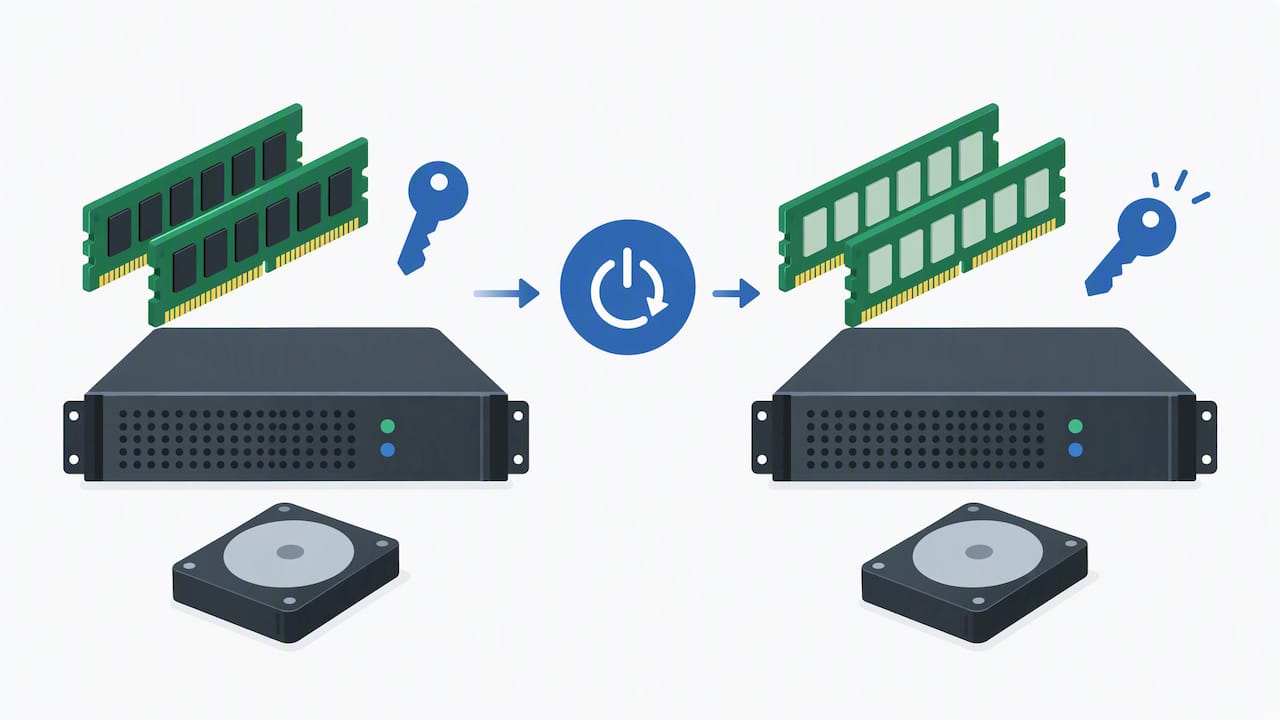
Jurisdictional alliance membership is a poor stand-in for security. An audited, RAM-only provider based in a 14 Eyes country can be meaningfully safer than an unaudited provider based somewhere with no formal surveillance treaties at all, since the second provider’s claims have never been independently tested.
Beyond audits and RAM-only infrastructure, a few other signals are worth checking before you trust a provider’s privacy claims:
- A published transparency report showing the number of government requests received and how many resulted in data disclosure.
- A documented incident history, including any past police raids or subpoena responses, and how the provider’s logging policy held up under them.
- Clear, verifiable corporate ownership rather than a shell structure that obscures who actually runs the service.
Research from UCL’s STEaPP program points to a related blind spot: hidden ownership structures and shared infrastructure between supposedly competing VPN brands can quietly undercut jurisdictional protections a user thought they had. A provider might be legally based somewhere privacy-friendly while its servers, support staff, or parent company sit somewhere else entirely. Ownership clarity belongs on your checklist right next to the audit report.
When jurisdiction really does matter: traffic analysis and bulk collection
Even a perfectly audited, no-logs VPN can’t stop every kind of surveillance, because some attacks target traffic patterns instead of stored logs. Traffic analysis works by correlating the timing and volume of data entering one end of a connection with data leaving the other end. If an adversary can observe both your connection to the VPN and the VPN’s connection to the destination server, they can sometimes match the two without ever needing a single log file.
A single-hop VPN, the standard setup most people use, routes everything through one server. That’s enough to stop casual snooping on public WiFi or blind your internet provider to browsing history, but it offers limited protection against a well-resourced adversary capable of watching traffic at multiple points on the network. A September 2025 advisory and accompanying memo sent to the NSA by Senator Wyden makes exactly this point: single-hop commercial VPNs don’t protect against sophisticated traffic-analysis attacks, and resistance to this kind of bulk, passive collection scales with the number of independent hops and the unpredictability of timing between them.
That’s where multi-hop architecture, Tor, and mixnets come in:
- Multi-hop VPN routing sends traffic through two or more servers, often in different jurisdictions, so no single operator sees both your identity and your destination.
- Tor adds multiple independently operated relays with layered encryption, making timing correlation significantly harder for a single observer to pull off.
- Mixnets go further, deliberately delaying and reordering packets from multiple users to break the timing patterns that traffic analysis depends on.
- Apple’s Private Relay splits traffic handling between two separate operators, a split-knowledge design similar in spirit to multi-hop VPN routing.
Pro Tip: If your threat model includes a government-level adversary rather than just your internet provider or a snooping stranger on public WiFi, a single-hop VPN alone isn’t enough. Layer in Tor or a multi-hop configuration for that specific activity.
For more on how tunneling and hop architecture actually work under the hood, our technical explainer on VPN tunneling breaks down the mechanics in plain terms.
How to evaluate a VPN for 14 Eyes and general privacy concerns
Use this checklist in order. Each step builds on the last, and skipping the early ones makes the later ones harder to trust.
- Check for an independent audit. Look for the auditor’s name, the scope of what was tested, and the date. A policy statement with no third-party verification is just marketing.
- Confirm RAM-only server infrastructure. Providers that run this setup usually advertise it prominently; if you can’t find it stated clearly, assume the servers use traditional disk storage.
- Read the no-logs policy scope, not just the headline claim. Some providers exclude connection timestamps or bandwidth data from their “no logs” promise. Read the actual exclusions.
- Look for a transparency report. A provider that publishes how many government requests it received and what it handed over is giving you something concrete to evaluate.
- Check payment options. Support for cryptocurrency or cash payments signals a provider built privacy into the business model rather than bolting it on.
- Verify kill switch functionality. Test whether your real IP leaks if the VPN connection drops, rather than trusting the feature name alone.
- Search for incident history. A provider that’s faced a subpoena or police request and can point to its logging policy holding up under scrutiny has more credibility than one that’s never been tested.
Pro Tip: Before signing up, email the provider’s support team and ask directly what data they’d have to produce in response to a court order. A vague or evasive answer tells you as much as a confident one.
For protocol-level choices that affect how securely your traffic actually travels once you’ve picked a provider, our guide to VPN protocols covers the trade-offs between WireGuard, OpenVPN, and IKEv2.
What typical users should prioritize versus high-risk users
Most people don’t need multi-hop routing or Tor for everyday browsing, but the baseline still matters. If you’re using a VPN to keep your internet provider from seeing your traffic, secure public WiFi connections, or access region-restricted content, your priorities are narrower and more practical.
- Everyday users should prioritize an audited no-logs policy, a working kill switch, support for modern protocols like WireGuard, and speeds that don’t make the VPN annoying to leave on.
- High-risk users, including journalists, activists, and anyone facing a government-level threat model, should prioritize multi-hop or mixnet routing, careful operational security habits, and minimizing reliance on any single provider for sensitive activity.
- Trade-offs are real in both directions. Multi-hop and Tor routing cost you speed and add complexity; a single, fast, audited VPN is often the better practical fit for daily use.
The honest answer for most readers is that a well-audited single-hop VPN handles the overwhelming majority of real-world privacy needs. Reserve multi-hop and Tor for the specific moments when your situation calls for it, not as a default.
How we test VPN privacy claims before trusting them
We don’t take a provider’s no-logs claim or jurisdiction page at face value. Our hands-on testing process checks whether the audit a provider cites actually exists, who performed it, and whether the scope matches what the provider’s marketing implies.
Our checks include confirming RAM-only server claims against the provider’s own technical documentation, running leak tests to see whether a dropped connection exposes a real IP address despite a kill switch being advertised, and verifying server location claims against actual connection data rather than assuming the map on the provider’s website is accurate.
We also look at a provider’s track record: whether it’s published a transparency report, how it responded to any past legal requests, and whether its ownership structure is disclosed or obscured. None of this replaces reading a provider’s policy yourself, but it gives you a second, independently verified check before you commit to a service that handles your entire internet connection.
Weigh our findings as one input among several. A provider that passes our leak tests and has a credible, named audit behind its no-logs claim has earned more trust than one relying on jurisdiction alone, regardless of which country it calls home.
Balancing an ideal privacy posture with real-world usability
The instinct to rule out every 14 Eyes provider on sight is understandable, but it optimizes for the wrong variable. Geography is easy to check and feels decisive, which is exactly why it gets overweighted. Verified behavior, audits, RAM-only architecture, transparency reporting, takes more effort to confirm and tells you far more.
A VPN is also only one piece of a workable privacy setup. Pairing it with a password manager and a few consistent secure browsing habits closes gaps that no VPN, regardless of jurisdiction, was ever designed to cover. Our VPN review hub tracks which providers back up their claims with real audits, so you’re not starting that research from zero.
— TechStackTeam
Find audited VPN reviews and current deals
We test VPNs with real accounts, checking audit claims, RAM-only server architecture, and leak behavior firsthand instead of repeating marketing materials. Every review is regularly updated, and rankings are not influenced by affiliate payouts, so a provider’s 14 Eyes jurisdiction receives consistent scrutiny regardless of commission status.

If you’ve worked through the checklist in this guide and want to see how specific providers score against it, our VPN services reviewed and ranked with deals hub lays out audit status, server architecture, and current pricing side by side. We also maintain a deeper explainer on how VPNs protect against surveillance if you want the full methodology behind our testing.
- Monthly-updated reviews based on hands-on testing with real provider accounts.
- Rankings built from audit verification and leak testing, not affiliate payout size.
- A deal hub that lets you compare current pricing across audited providers directly.
Check our VPN reviews and deals page to see which audited providers fit your situation before you commit to a plan.
FAQ
Which countries have banned VPN use?
VPN restrictions vary widely by country and change over time, so we won’t list a specific country as currently banning VPNs here since that status shifts and needs checking against current law in your location. Some countries restrict VPN use heavily or require government-approved VPNs, while most, including the countries covered in this guide, impose no such ban. Check your local telecommunications authority’s current guidance if this applies to your situation.
What are Five Eyes, Nine Eyes, and 14 Eyes?
Five Eyes is the original intelligence-sharing partnership among the United States, United Kingdom, Canada, Australia, and New Zealand, dating back to post-war agreements. Nine Eyes adds four more European countries, and 14 Eyes (officially SIGINT Seniors Europe) expands that group to fourteen total members coordinating signals intelligence sharing.
Are VPNs worth it in 2026?
A VPN is still worth using for shielding your traffic from your internet provider, securing public WiFi connections, and adding a layer of privacy to everyday browsing. Its value depends heavily on the specific provider’s audit status and architecture rather than on VPNs as a category, so check our evaluation checklist before choosing one.
Is any VPN completely free and still safe to use?
Free VPNs typically fund themselves through data collection, ad injection, or selling bandwidth, which works against the privacy goals most people are using a VPN for in the first place. Rather than naming a specific free option, we’d point you toward checking a provider’s audit status and revenue model, since a transparent paid provider with a verified no-logs policy generally offers stronger protection than a free one with an unclear business model.
Sources
- FTC: Market for VPN apps
- Wyden letter to NSA and attached CRS memo
- Intrusion of privacy by the protectors of privacy: hidden risks of commercial VPN services (UCL STEaPP)
- GCHQ: Brief history of UKUSA