About 37 states and Washington, D.C. have some form of ban-the-box policy, but most of those laws only restrict public employers, not private businesses. If you run a hiring process in more than one state, verify the exact state and local rule before you touch your application forms or interview workflow. Getting this wrong is an easy, avoidable mistake.
TL;DR:
- Private employer coverage may start above state specific thresholds of 4 to 15 workers, with exemptions for licensed jobs and roles serving vulnerable groups.
- California generally delays conviction questions until a conditional offer, while Illinois permits them after interview selection or, without an interview, after a conditional offer.
- Local ordinances add posting and notice duties beyond state law, so employers need city specific hiring workflows in San Francisco and Los Angeles County.
- Configure screening vendors to wait for the legal trigger point; running checks earlier can violate timing rules even when employers ignore the results.
- A legal screening mandate can override fair chance timing for some roles; otherwise, employers should assess convictions individually against job duties.
Table of Contents
- How to read the ban the box state map
- Which employers and jobs these laws actually cover
- When you can legally ask about criminal history
- Your HR compliance checklist for ban the box
- Why local ordinances add another layer of rules
- How EEOC guidance shapes criminal-history screening risk
- How ban the box changes outcomes for applicants with records
- What supporters and critics say about ban the box
- What research shows about hiring outcomes
- How background check timing fits into the picture
- Advice for job seekers facing criminal history questions
- Where TechStackToday’s privacy and background-check coverage fits in
- Where to go next for background check and privacy guidance
- FAQ
- Sources
How to read the ban the box state map
The confusion around “how many ban the box states” exist comes down to counting method. Some trackers count any state that has adopted a ban-the-box policy at all, even if it only covers public-sector jobs. Others count only the states where the law reaches private employers too. Both numbers get reported as “the” total, which is why you’ll see different figures depending on the source.
NCSL’s state-by-state compilation reports that a broad number of states plus D.C. have some ban-the-box policy on the books, while making clear that most of those statutes apply to public employment only. A smaller group of states extends the restriction to private employers as well, usually with its own thresholds and exceptions.
Here’s the practical breakdown to work from:
- Public-employer-only states: the law restricts when state and local government agencies can ask about criminal history, but private companies are not covered.
- Private-employer-including states: the law extends some version of the same restriction to private businesses, often with a minimum employee count.
- Hybrid approaches: some states cover private employers only for larger companies or only within certain industries, while leaving smaller employers out.
- Local-only coverage: a handful of states have no statewide private-employer law at all, but individual cities or counties layer on their own ordinance.
States commonly cited as extending some form of ban-the-box coverage to private employers include California, Illinois, Minnesota, New Jersey, Hawaii, Massachusetts, and a handful of others, but treat that list as a starting point for orientation, not as a substitute for reading the actual statute. NELP’s fair-chance guide traces the movement back to Hawaii’s original 1998 law and shows how coverage has broadened unevenly since then, which is part of why no two trackers agree on an exact number.
Before you rely on any list, including this one, confirm three things for your state: whether the rule comes from a statute, an executive order, or an agency rule; whether it has been amended since you last checked; and the effective date, since several states have updated thresholds or added private-employer coverage in recent years. The LawAtlas ban-the-box dataset is built for exactly this kind of verification, tagging each state’s law with its scope, exceptions, and trigger point in the hiring process.
Which employers and jobs these laws actually cover
Coverage hinges on two questions: are you a public or private employer, and does your state’s law reach your size of business? Most ban-the-box statutes started with public agencies and government contractors, then some states expanded outward. Where private coverage exists, it often kicks in only above a minimum headcount, commonly somewhere between 4 and 15 employees depending on the state.
Even covered employers get carve-outs. The most common exemptions include:
- Law enforcement and corrections roles, where criminal-history screening at the application stage is often required rather than restricted.
- Positions requiring a professional license, such as healthcare, childcare, or financial services roles with their own background-check mandates.
- Jobs working with children, the elderly, or other vulnerable populations, which frequently carry separate statutory screening duties that override ban-the-box timing.
- Roles where another federal or state law already mandates a criminal-history check, like certain transportation or security positions.
Contractors, temp workers, and government-contractor roles get treated inconsistently across states. Some laws reach staffing agencies the same way they reach direct employers, while others exempt temporary placements or apply only once a worker is hired permanently. Government contractors sometimes face stricter timing rules than private employers in the same state, since public procurement rules can stack on top of the state’s general ban-the-box statute. The safest approach is to check your specific role category against your state’s statute text rather than assume a general ban-the-box rule automatically covers or excludes it.
When you can legally ask about criminal history
Timing is where most ban-the-box compliance mistakes happen. The three common trigger points are: never on the initial application, only after the first interview, or only after a conditional job offer. Which one applies depends entirely on your state or city.
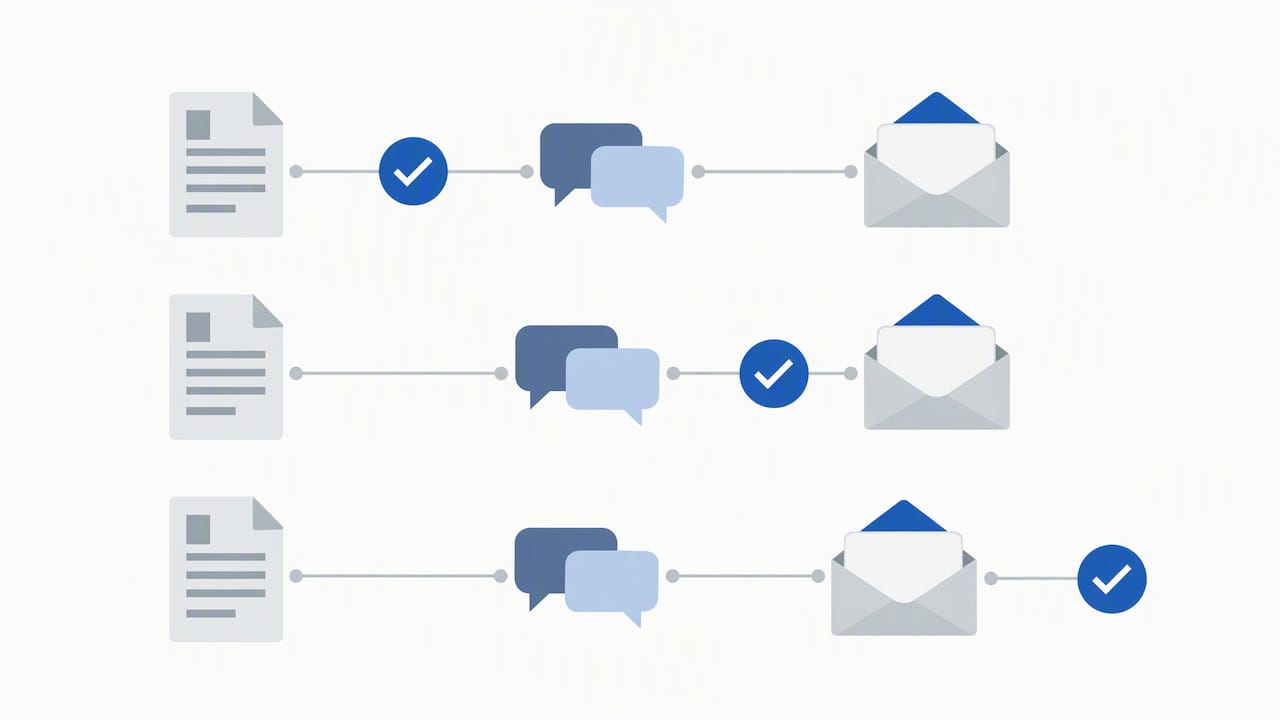
California requires most covered employers to wait until after a conditional offer before asking about or considering conviction history. Illinois takes a slightly different approach: its Job Opportunities for Qualified Applicants Act allows the inquiry once an applicant has been selected for an interview, or after a conditional offer if no interview is conducted, with its own list of exempted positions.
A few situations override ban-the-box restrictions entirely:
- Commercial driver qualifications that require a federal or state motor-vehicle background check before hiring.
- Licensed positions where the licensing board mandates a criminal-history review as part of certification.
- Jobs legally barred to people with certain convictions, where the employer has no discretion to delay the inquiry.
When a federal or state statute requires the check, that requirement controls, and ban-the-box timing rules do not block it.
Your HR compliance checklist for ban the box
Turning these rules into a working process takes more than a policy memo. Follow this sequence to reduce risk and keep your hiring workflow defensible.
- Audit every application form and online portal for conviction-history questions and remove any that violate your state’s timing rule.
- Map out your trigger points for each role type: when you can ask, and whether that’s post-interview or post-offer.
- Build an individualized assessment procedure that ties directly to job duties, following the framework in EEOC enforcement guidance on conviction records.
- Train recruiters and hiring managers on the exact wording they can and cannot use during interviews, not just on the written form.
- Update vendor contracts with your background-check provider so screening requests align with your trigger points rather than running automatically at application.
- Document every decision tied to a criminal-history finding, including the job analysis and the specific factors considered, in case of a complaint or audit.
For a deeper walkthrough of building these workflows, our background check guide for HR and small business covers the operational side in more detail, and our legal background check guide breaks down the screening steps themselves.
Pro Tip: Set your applicant tracking system to block the criminal-history field until a candidate reaches your state’s legal trigger point, so the restriction is enforced by the software, not by memory.
Why local ordinances add another layer of rules
State law is rarely the end of the story. Cities and counties frequently pass their own fair-chance ordinances that go further than the state requirement, and employers operating in multiple locations need a location-by-location checklist, not just a state-level one.
San Francisco’s Fair Chance Ordinance is a good example of how specific local rules get. It requires employers doing business in the city to delay conviction-history questions until after a conditional offer, and it adds its own requirements on top: a mandatory workplace poster, specific language in job postings, and a defined process for considering a conviction once it’s disclosed.
Los Angeles County has its own Fair Chance ordinance with additional notice and documentation requirements that stack on top of California’s statewide law. The practical effect is that an employer posting the same job in San Francisco, Los Angeles, and a smaller California city may face three overlapping sets of obligations.
- Use geo-aware job posting templates so the conviction-history language automatically matches the posting location.
- Keep a jurisdiction checklist for every city and county where you actively hire, not just your headquarters state.
- Review posting and poster requirements annually, since municipal ordinances change more frequently than state statutes.
How EEOC guidance shapes criminal-history screening risk
Even where no ban-the-box law applies, federal law still constrains how you use conviction records. EEOC enforcement guidance warns that blanket exclusions based on criminal history can violate Title VII when they produce a disparate impact without serving a legitimate business need.
Targeted screening tied to job duties, backed by an individualized assessment, is a far more defensible standard than any flat exclusion rule. The guidance pushes employers toward a business-necessity test: does the conviction relate closely enough to the job’s duties, how much time has passed, and what was the nature of the offense. An individualized assessment that documents those factors, rather than a one-size-fits-all policy, gives you a record to point to if a decision is ever challenged.
Practical steps that align with this guidance include running a job analysis for each role category, applying the same documented protocol to every candidate in that category, and looping in legal counsel before adopting any blanket disqualification rule.
How ban the box changes outcomes for applicants with records
For job seekers with a criminal record, the core benefit of ban-the-box policy is straightforward: it buys you a chance to be evaluated on your interview or your resume before a conviction becomes the deciding factor. Minnesota’s guidance frames this clearly, noting that the goal is to get candidates in front of a hiring manager as a person first.
That said, delaying the question doesn’t guarantee a job offer. Minnesota’s own materials are direct about this: ban-the-box removes an early filter, it does not remove an employer’s right to decline to hire based on a relevant conviction later in the process. For applicants, that means the practical value shows up earlier in the funnel, in getting to the interview or the conditional-offer stage, rather than at the final hiring decision.
The effect also varies by how strict the local law is. In a state with private-employer coverage and a strict timing rule, like California, an applicant may get all the way to a job offer before conviction history even comes up. In a state where the law only covers public employers, a private-sector applicant may see no change in timing at all.
What supporters and critics say about ban the box
Supporters argue the core benefit is simple: it gives qualified candidates with a record a fair shot at being judged on their skills first. Advocacy groups like NELP have pushed these laws partly on the theory that reducing barriers to employment for people with records also reduces recidivism.
Critics, including some employer groups, raise a different concern: that delaying the criminal-history question doesn’t eliminate the information from the hiring decision, it just moves it later, and in some cases makes the process more expensive by requiring further interviews or offers before background screening happens. Some employers also point to added administrative burden in multi-state operations, since a chain with locations in a dozen states may be running a dozen different versions of the same workflow.
Both sides generally agree on one thing: the practical outcome depends heavily on how the law is implemented and enforced locally, not just on whether a state has adopted some version of the policy. A law with strong individualized-assessment requirements and real enforcement tends to produce different outcomes than one that exists mostly on paper.
What research shows about hiring outcomes
Measuring the real-world effect of ban-the-box laws is harder than it sounds, because outcomes depend on enforcement intensity, local labor market conditions, and how strictly employers follow the timing rules. What’s clear from the guidance documents themselves is more modest than sweeping claims of success or failure: these are process changes, and process changes shift when information enters a hiring decision rather than whether it’s considered at all.
Minnesota’s own compliance materials are careful to frame ban-the-box as a step that improves access to interviews, not as a guarantee of improved hiring rates for people with records. That’s a useful corrective to the idea that these laws solve employment barriers on their own. The honest summary for employers and applicants alike is that ban-the-box changes the sequence of a hiring decision, and the magnitude of that change depends on how rigorously a given state or city enforces its law.
How background check timing fits into the picture
Ban-the-box rules and background-check law intersect at exactly one point: when you’re allowed to run the check and ask about what it finds. The ban-the-box statute sets the earliest point you can ask about conviction history, while separate laws, like the federal Fair Credit Reporting Act, govern how you request consent, deliver adverse-action notices, and handle disputes once a report comes back.
In practice, this means your background-check vendor relationship has to be configured around your state’s trigger point, not around your own internal convenience. If your state requires a conditional offer before any conviction inquiry, your screening request to a background-check vendor should also wait until that offer stage, not run automatically the moment an application is submitted. Running the check too early is itself a form of ban-the-box noncompliance, even if you never act on the result.
For a breakdown of what a standard screening actually searches and how far back it typically reaches, our guide to criminal record screening covers the mechanics, and our overview of background check types explains which checks tend to trigger separate statutory duties beyond ban-the-box timing.
Advice for job seekers facing criminal history questions
If you’re applying for jobs in a ban-the-box state, you generally won’t see a conviction-history question on the initial application itself. That doesn’t mean the topic disappears, it means it surfaces later, often after an interview or a conditional offer, depending on your state’s rule.
A few things help to go into that conversation. Know your own record and how your state’s lookback period treats it, since some states limit how far back an employer can consider a conviction. If a conditional offer is withdrawn based on a background-check finding, you generally have the right to receive a copy of the report and a chance to respond before a final decision, under federal consumer-reporting rules. Keep documentation of your conditional offer and any correspondence about the check, since timing disputes are easier to resolve with a paper trail. If you believe an employer asked about your record earlier than your state or city allows, most ban-the-box laws are enforced through a state labor or human-rights agency, which is the right first point of contact for a complaint.
Where TechStackToday’s privacy and background-check coverage fits in
We cover background-check tools, data removal services, and identity-protection products as part of our core privacy reporting, with reviews based on careful evaluation rather than vendor claims. That same scrutiny applies when we explain how a screening report is built and what shows up in it. Employers navigating ban-the-box compliance benefit from pairing legal review with a clear-eyed look at how the screening tools themselves actually work.
— TechStackTeam
Where to go next for background check and privacy guidance
Getting your hiring process compliant is only half the equation. If you also want to understand what a background check pulls, how long records stay visible, and how to keep your own information out of public databases, we’ve built a set of guides for exactly that.

Our background check compliance requirements guide walks through obligations across jurisdictions in more depth, and if you’re evaluating HR platforms to help manage conditional-offer timing and geo-specific job postings, this comparison of HR software for e-commerce stores is worth a look. For readers more focused on personal privacy than hiring compliance, our data removal service guide covers how to reduce the amount of personal information available for background searches in the first place.
This article is general information, not a substitute for advice from a qualified lawyer. Consult a qualified legal professional about your own circumstances before acting on anything here.
FAQ
What states have background checks?
Every state allows employers to run background checks, since this is governed primarily by federal consumer-reporting law rather than a state-by-state ban. What varies by state is the timing of the criminal-history question under ban-the-box rules and how far back a report can look.
What happens if you fail a background check for a job?
A concerning result usually leads to an adverse-action process rather than an automatic rejection: the employer must share a copy of the report and give you a chance to respond before finalizing the decision. Under EEOC guidance, the employer is also expected to run an individualized assessment rather than apply a blanket exclusion.
What’s the difference between a background check and a federal background check?
A standard background check typically searches county and state criminal databases tied to where you’ve lived, while a federal background check searches for federal offenses prosecuted in federal court, which cover a narrower category of crimes. Most employment screenings rely on state and county records since federal convictions are comparatively rare.
Do felonies follow you from state to state?
Yes, a felony conviction is part of your criminal record regardless of which state you move to or apply for work in, since records are generally accessible through state and national databases. What changes by state is not whether the record exists, but how long an employer can consider it and when in the hiring process they’re allowed to ask.
Sources
- Ban the Box (NCSL)
- EEOC enforcement guidance on consideration of arrest and conviction records
- San Francisco fair chance ordinance
- MDHR ban-the-box brochure (Minnesota Department of Human Rights)
- Ban the Box — Fair Chance state and local guide (NELP)