Identity theft goes undetected because most alerts fire only after fraud has already occurred, with systemic delays built into financial reporting and monitoring mechanisms. The industry term for this gap is “detection lag,” and it affects millions of Americans every year. Credit bureaus like Equifax, Experian, and TransUnion receive updates on fixed batch cycles. Services like LifeLock and similar monitoring tools can only alert you to what those systems have already processed. Understanding why this lag exists is the first step toward catching fraud before it destroys your credit.
Why identity theft goes undetected: reporting cycles are the root cause
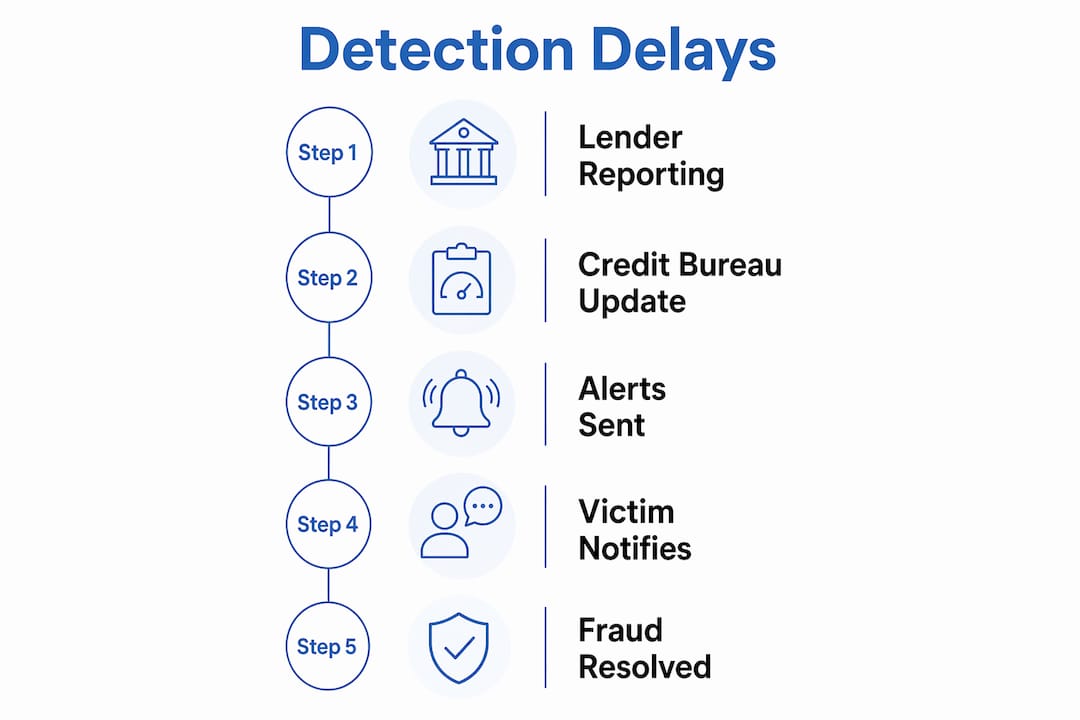
The biggest structural reason identity fraud goes unnoticed is the monthly batch reporting cycle used by lenders, merchants, and credit bureaus. Most creditors report account activity to Equifax, Experian, and TransUnion once per month, not in real time. That means a fraudster can open a new credit card, run up charges, and disappear before a single alert reaches you.
Alerts fire only after damage is done, with data brokers and credit bureaus updating on fixed cycles that add further delay. This is not a flaw in any one company’s system. It is a structural feature of how financial data flows across the entire industry.
The table below shows typical time gaps between fraudulent activity and when you would realistically see an alert:
| Event | Typical Delay Before Alert |
|---|---|
| New fraudulent account opened | 2–6 weeks |
| Fraudulent charge on existing account | 1–4 weeks |
| Hard credit inquiry by fraudster | 2–4 weeks |
| Credit report update reflecting fraud | 30–45 days |
| Monitoring service alert after bureau update | 1–7 days after update |
Each delay stacks on top of the previous one. By the time you get a notification, the damage is often weeks old.
Fraud detection systems rely on completed transactions and thresholds, which causes late detection and allows fraud to develop over time. Banks and lenders investigate internally before flagging anything externally, adding another layer of delay between the criminal act and your awareness of it.
Pro Tip: Sign up for free credit monitoring through all three major bureaus and set alerts for any new account openings or hard inquiries. Even a 24-hour head start matters.
Why is identity theft so underreported?
Underreporting is one of the most overlooked factors in identity theft detection. The Bureau of Justice Statistics estimated 23.9 million victims in 2021, while the FTC received only 1.4 million reports that same year. That means roughly 94% of victims never filed an official report. When victims stay silent, systemic patterns go unrecognized and fraud rings operate longer without disruption.
Why do so many people skip reporting? The reasons are consistent across victim surveys:
- Embarrassment or shame about being deceived, especially in cases involving phishing scams
- Self-resolution attempts where victims contact banks directly and assume the matter is closed
- Distrust of the process, believing a police report or FTC complaint will not lead to any real outcome
- Lack of awareness that reporting to IdentityTheft.gov or the FTC creates a legal record that helps with recovery
- Time pressure, since filing a detailed report feels overwhelming when you are already dealing with financial damage
This underreporting creates a feedback loop. Official statistics undercount the true scale of the problem. That means fewer resources go toward systemic fixes, and public awareness stays lower than it should be. The identity theft recovery steps you take after fraud matters, but so does filing that report.
How does synthetic identity fraud evade detection?
Synthetic identity fraud is defined as the creation of a fictitious identity using a combination of real and fabricated information, such as a real Social Security number paired with a fake name and address. It is fundamentally different from traditional stolen identity fraud, where a real person’s complete profile is used. With synthetic fraud, there is no direct victim to notice something is wrong.
Synthetic identity fraud can remain undetected for months or years because it does not map to a real victim who can notice or report fraud. Fraudsters build these fake profiles slowly, applying for secured credit cards, making small payments, and establishing a credit history that looks completely legitimate. This process is called “credit seasoning,” and it can take 12–24 months before the fraudster executes the final “bust-out,” maxing out all available credit and vanishing.

The comparison below shows why synthetic fraud is so much harder to catch than traditional theft:
| Factor | Stolen Identity Fraud | Synthetic Identity Fraud |
|---|---|---|
| Victim exists | Yes | No |
| Victim can report fraud | Yes | No direct victim |
| Triggers standard alerts | Often | Rarely |
| Detection timeline | Weeks to months | Months to years |
| Credit bureau flags | Possible | Unlikely until bust-out |
| Primary detection method | Victim dispute | Pattern analytics |
Synthetic fraud lacks victim friction, meaning nobody disputes the fraudulent accounts until the damage peaks. Traditional verification systems check whether information matches existing records, but synthetic profiles are designed to pass those checks. Detecting them requires behavioral analytics and cross-referencing data sources well beyond a standard credit file.
Pro Tip: Check your Social Security Administration account at ssa.gov regularly. If earnings are reported under your SSN that you do not recognize, a synthetic or stolen identity may be in use.
How to detect identity theft before the alerts hit
Relying solely on alerts fails because early signals are secondary indicators that require proactive self-monitoring rather than waiting for a notification. You can spot fraud weeks earlier than any automated system if you know what to look for. Here is a numbered checklist to build into your routine:
-
Pull your credit reports from all three bureaus. Use AnnualCreditReport.com to access free reports from Equifax, Experian, and TransUnion. Look for accounts you did not open and hard inquiries you did not authorize.
-
Check for unfamiliar hard inquiries. A hard inquiry you do not recognize means someone applied for credit in your name. This is often the earliest visible sign of how identity theft happens before any account is actually opened.
-
Monitor your IRS account at IRS.gov. Log in and check whether any tax returns have been filed under your Social Security number. Tax identity theft is one of the most common forms of the crime and often goes undetected until you file your own return.
-
Review your Social Security earnings record. Visit ssa.gov/myaccount and confirm that reported earnings match your actual employment history. Discrepancies signal that someone is working under your SSN.
-
Watch for unexpected bills or collection calls. A debt collector calling about an account you never opened is a strong indicator of fraud. Do not dismiss it as a wrong number.
-
Freeze your credit at all three bureaus. A credit freeze blocks lender access and is the single most effective tool for preventing new account fraud. It costs nothing and takes minutes to set up.
-
Set up fraud alerts. A fraud alert requires lenders to verify your identity before opening new credit. According to myFICO, credit freezes and fraud alerts serve different but complementary purposes. Use both.
-
Scan for data breach notifications. Use tools like Have I Been Pwned to check whether your email address appears in known data breaches. A breach is a direct warning that your credentials may be circulating on criminal markets.
Effective identity protection requires shifting awareness earlier in the fraud lifecycle rather than waiting for reactive alerts. These steps are not one-time actions. Run through this list every 90 days.
Key takeaways
Identity theft goes undetected primarily because financial reporting cycles, victim underreporting, and synthetic fraud techniques all create time gaps that automated alerts cannot close on their own.
| Point | Details |
|---|---|
| Reporting cycles cause lag | Fraudulent activity can take 30–45 days to appear on credit reports due to batch update schedules. |
| Underreporting hides the scale | Only about 6% of identity theft victims file an official report, masking the true size of the problem. |
| Synthetic fraud has no victim | Fake identities built from mixed real and fabricated data can operate undetected for months to years. |
| Alerts are reactive by design | Monitoring services notify you after bureau updates, not when fraud actually occurs. |
| Proactive monitoring closes the gap | Checking credit reports, IRS records, and SSA earnings every 90 days catches fraud before alerts do. |
The detection gap is a system problem, not a user failure
After reviewing dozens of identity protection services at Techstacktoday, one pattern stands out clearly: most people blame themselves for missing fraud. They should not. The detection gap is built into the system.
Credit bureaus were designed for lending decisions, not fraud prevention. Batch reporting made sense in 1970. It does not make sense now. The fact that a fraudster can open three credit cards and spend $15,000 before you receive a single notification is not your failure to pay attention. It is a structural flaw that the industry has been slow to fix.
What I have found actually works is treating your credit profile like a bank account you check weekly. Not monthly. Not when something feels wrong. Weekly. The readers who catch fraud earliest are not the ones with the most expensive monitoring service. They are the ones who pull their own reports, check their IRS account, and actually read the alerts they receive instead of dismissing them.
Synthetic fraud is the piece that concerns me most right now. Because there is no direct victim, it can run for years without triggering a single dispute. If your SSN was exposed in a data breach, which is statistically likely given breaches at Equifax, T-Mobile, and the National Public Data incident, a synthetic profile using your number could be building credit right now without your knowledge.
The fix is not panic. The fix is a 20-minute monthly routine and the right tools in place before you need them.
— TechStackTeam
Protect yourself before the next alert fires
Most identity protection tools tell you what already happened. Techstacktoday tests services that go further, including VPNs that block data exposure at the source, data removal services that pull your personal information from broker databases, and identity protection services ranked purely on performance, not paid placement.

If you are serious about closing the detection gap, start with two things: a credit freeze at all three bureaus and a VPN for your daily browsing. Techstacktoday’s reviewed and ranked VPN services are tested in real-world scenarios so you know exactly what you are getting. No guesswork, no paid rankings. Just honest results from hands-on testing across 50-plus privacy services.
FAQ
Why does identity theft take so long to detect?
Identity theft detection is delayed because credit bureaus and lenders update records on monthly batch cycles, meaning fraudulent activity can take 30–45 days to appear on your report. Monitoring services can only alert you after those updates process.
What are the first signs of identity theft?
The earliest signs are unfamiliar hard inquiries on your credit report and new accounts you did not open. These appear before any financial damage shows up and are your best early warning.
What is synthetic identity fraud?
Synthetic identity fraud uses a mix of real and fabricated information to create a fictitious credit profile. Because no single real person is victimized, there is no one to report the fraud, allowing it to go undetected for months or years.
Does a credit freeze stop all identity theft?
A credit freeze blocks new account fraud by preventing lenders from accessing your credit file, but it does not protect against misuse of your existing accounts. Use a freeze alongside active account monitoring for full coverage.
How often should i check my credit report?
Check your credit reports from Equifax, Experian, and TransUnion at least every 90 days. Also review your IRS account and Social Security earnings record twice a year to catch tax and employment identity fraud early.