Yes, as a parent or legal guardian you can place a free security freeze on your child’s credit file. You do it by contacting each of the three nationwide credit bureaus separately and submitting a short set of ID documents. Once in place, the freeze blocks new credit applications filed in your child’s name and stays active until you remove it. Start now by gathering your documents and reaching out to Equifax, Experian, and TransUnion.
TL;DR:
- Placing a child’s security freeze involves contacting all three credit bureaus separately and submitting copies of ID and guardianship documentation.
- The process may require mailing copies and handling delays, especially if a bureau processes requests mainly via mail or needs extra guardianship proof.
- The freeze does not affect credit scores and remains indefinite until the parent or child requests removal, which can be done anytime after age 16.
- To optimize protection, parents should limit Social Security number sharing, set strong passwords, and consider additional alerts or monitoring efforts.
- Processing times vary, but keeping confirmation PINs and records simplifies future lift requests or progress transitions to the child at age 16.
Table of Contents
- Step-by-step: how to place a freeze at Equifax, Experian, and TransUnion
- Exact document checklist and proof of authority you must include
- Processing times, confirmation steps, and how to handle the bureau PIN or confirmation
- What a freeze doesn’t stop and complementary protections parents should use
- How and when to lift a freeze or let the child take control at age 16
- TechStackTeam perspective on fitting a freeze into a family privacy plan
- TechStackToday resources and tools parents can use right away
- FAQ
- Sources
Step-by-step: how to place a freeze at Equifax, Experian, and TransUnion
Each bureau runs its own system, so you need three separate requests, not one. Here’s the quickest path through all of them:
- Gather your documents first so you only have to assemble them once (see the checklist below).
- Contact Equifax using its minor freeze process; be ready to mail copies if the online form directs you to.
- Contact Experian through its dedicated minor credit freeze request path.
- Contact TransUnion separately, since a freeze with one bureau does not carry over to the others.
- Track every submission with a confirmation number, tracking slip, or screenshot.
Some bureaus process minor freeze requests mostly by mail, which means don’t expect an instant online toggle the way you might get with your own credit freeze. If your child has no credit file yet, that’s normal. The bureau will create a blank file specifically so it can be frozen, which blocks anyone from opening new credit under that file later.
A few habits save you real time:
- Send photocopies, never originals, of IDs and certificates.
- Use certified mail with a return receipt if a bureau requires paper submission.
- Keep a dated log of what you sent, to which address, and when.
- Request freezes for all three bureaus in the same sitting so nothing slips through.
Federal law has required all three nationwide bureaus to offer these freezes for free since that law became effective in September 2018, and the protection remains in effect indefinitely until a parent or the child, once eligible, asks to have it removed, according to the Consumer Financial Protection Bureau. That single fact is worth repeating to any relative who assumes this costs money or expires automatically.
Exact document checklist and proof of authority you must include
Bureaus need to confirm two things: who you are, and that you have legal authority over the child. Pack a folder with:
- Your government-issued photo ID (driver’s license or passport).
- Proof of your current address (utility bill or bank statement).
- Your child’s birth certificate.
- Your child’s Social Security card or a document showing the SSN.
If you’re a legal guardian rather than a biological parent, or if your last name differs from your child’s, bureaus and the FTC note you may need extra proof of authority, such as a court order, guardianship paperwork, or an agency letter. Foster care representatives follow a similar but distinct path, since documentation requirements shift depending on the relationship to the child.
If paternity or parentage is in question on the birth certificate itself, some families need additional proof of paternity before a bureau will accept the documents.
Pro Tip: Make one labeled photocopy set per child, even if they share a last name. Mixing documents across siblings is the most common reason a freeze request gets kicked back for more information.
Processing times, confirmation steps, and how to handle the bureau PIN or confirmation
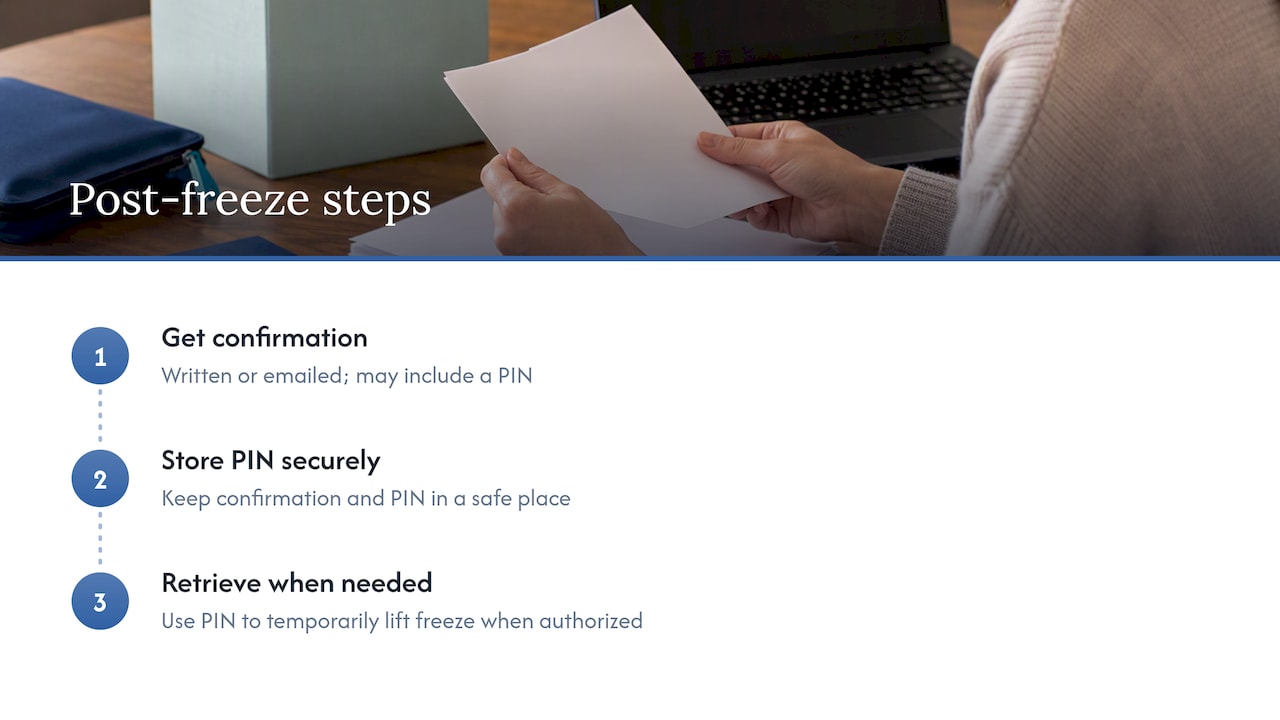
Timelines vary by bureau and by whether you submit online or by mail, so give the process a little breathing room rather than expecting same-day results across the board. You’ll typically get a written or emailed confirmation, and some bureaus issue a PIN or password tied to the freeze.
Keep that confirmation somewhere safe. You’ll need it later if you ever want to temporarily lift the freeze, say when your teen applies for their first credit card or a lender needs a one-time look at the file.
A security freeze does not affect your child’s credit score, because freezes only affect whether a new creditor can open an account, not how the file is scored, according to Experian. That’s reassuring news for parents worried the freeze itself might somehow hurt their child down the road. It won’t. It just stands guard at the door.
What a freeze doesn’t stop and complementary protections parents should use
A credit freeze is a strong lock, but it’s not the only door in the house. Experian’s own guidance notes that landlords, utility companies, and certain court-ordered or background checks you authorize may still pull a credit report even with a freeze active, since those aren’t new-credit decisions in the traditional sense.
That’s why a freeze works best paired with a few other habits:
- Add a fraud alert if you suspect your child’s information has already been exposed, since it adds an extra verification layer for any lender that does check.
- Limit how often your child’s Social Security number gets shared at schools, doctor’s offices, or sports leagues, and ask why it’s needed before handing it over.
- Set up strong, unique passwords for any accounts tied to your child, ideally through a password manager rather than a notebook or sticky note.
- Review mail and email for anything addressed to your child that looks like a bill, collection notice, or account statement.
None of these replace the freeze. They just cover the gaps a freeze was never designed to close.
How and when to lift a freeze or let the child take control at age 16
The rules shift once your child turns 16. Before that age, you as the parent or guardian are the only one who can request changes. At 16 and older, your child gains the legal right to manage, lift, or keep their own freeze.
Here’s how to handle the handoff smoothly:
- Keep confirmation numbers and PINs in one place so a temporary lift, say for a first credit card application, doesn’t turn into a multi-week scramble.
- Request a temporary lift with each bureau individually when a specific creditor needs access, rather than removing the freeze permanently.
- Talk to your teen around age 15 or 16 about transferring control, so they understand how to manage it once it’s legally theirs.
Good recordkeeping now prevents frustrating delays later, especially the week your child wants to apply for a student loan or their first card.
TechStackTeam perspective on fitting a freeze into a family privacy plan
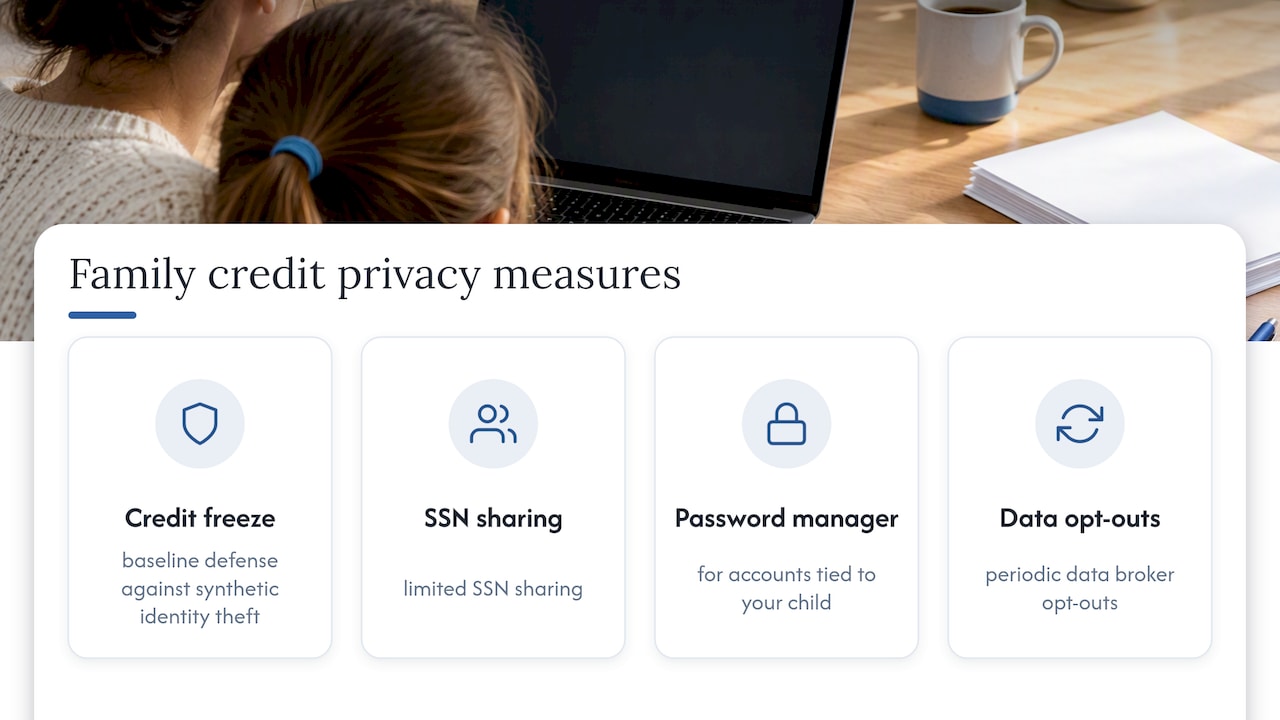
A credit freeze is one of the most efficient defenses against synthetic identity theft, where a fraudster combines a real child’s Social Security number with a fake name and date of birth to build an entirely new credit profile. Kids are attractive targets precisely because nobody checks their credit for years.
We treat the freeze as a baseline, not a finish line. Pair it with limited SSN sharing, a password manager for any accounts tied to your child, and periodic data broker opt-outs. For the fraud mechanics behind this advice, our guide on synthetic identity fraud walks through real patterns to watch for.
— TechStackTeam
TechStackToday resources and tools parents can use right away
A credit freeze handles the legal side. Reducing how much of your family’s data sits exposed online is the next layer, and that’s where our internet privacy tools comparison checklist comes in, covering the services that limit what data brokers and marketers can collect about your household.

| After the freeze | Why it helps |
|---|---|
| Limit SSN sharing at schools and clinics | Fewer places a thief can pull from |
| Use a password manager for family accounts | Blocks credential stuffing attacks |
| Run periodic data broker opt-outs | Shrinks your child’s public data footprint |
This isn’t a substitute for the bureau freeze process. It’s the next step once that’s done.
- Start with our privacy checklist for ongoing exposure reduction.
- Browse our password manager comparisons to lock down shared family logins.
This article is general information, not a substitute for advice from a qualified financial advisor. Consult a qualified financial professional about your own circumstances before acting on anything here.
FAQ
Can I put a freeze on my child’s credit?
Yes. Federal protections let parents and legal guardians place a free security freeze on a child’s credit file at each of the three nationwide bureaus. The freeze stays active until you or your child, once old enough, requests its removal.
How can I make sure my son’s Social Security number is not stolen?
Limit how often you share his Social Security number with schools, clinics, or sports organizations, and ask why it’s needed before handing it over. Placing a credit freeze adds another layer, since it blocks most new accounts from being opened even if the number leaks.
Is it worth freezing your child’s credit?
It’s one of the most practical defenses available against synthetic identity fraud, which often targets children specifically because nobody checks their credit for years. Since the freeze is free and doesn’t expire on its own, there’s little reason to skip it.
Can I build my 8 year old’s credit?
No. Credit files for children exist only to be frozen or monitored for fraud, not to build a credit history, since minors can’t legally hold their own credit accounts. Building credit history starts once your child is old enough to become an authorized user or open accounts in their own name.
Sources
- New protections available for minors under 16 | Consumer Advice
- New protections available for minors under 16 | Federal Trade Commission
- Should you freeze your child’s credit file? | Experian