Use Identitytheft first to create your FTC Identity Theft Report, then file a police report if you know the thief, your name got tied to a crime, or a creditor asks for one. Together, these two documents form the Identity Theft Report most banks and credit bureaus accept to erase fraudulent debt. Don’t panic. Do this in order and you’ll have real legal protection within a day.
TL;DR:
- Filing an FTC Identity Theft Report and police report can block fraudulent accounts within four business days and extend fraud alerts beyond one year.
- Quickly contacting affected banks and changing passwords, especially on email accounts, is essential to limit thieves’ access and prevent further damage.
- Organizing evidence like account numbers, suspicious activity, and statements before visiting the police speeds up the reporting process.
- Credit bureaus are required by law to promptly remove fraudulent information once they receive your reports, but disputes and follow-up are necessary for complete recovery.
- Using tools like password managers and data removal services can prevent repeat identity theft after damage control is complete.
Table of Contents
- Immediate steps you must take promptly
- How to report at IdentityTheft.gov and what the FTC affidavit provides
- How to file a police report for identity theft
- What an Identity Theft Report and police report accomplish
- Next steps after filing: disputes, records, and follow-up
- TechStackTeam practical tips: making the police report work for you
- Tools that help you avoid a repeat identity theft
- Sources
- FAQ
Immediate steps you must take promptly
Speed matters here. Every hour you wait gives a thief more room to open accounts or drain the ones you already have.
- Call the fraud department at every affected bank or card issuer and close or freeze compromised accounts.
- Change passwords on your email, banking, and shopping accounts, and turn on multi-factor authentication (MFA) everywhere it’s offered. Your email is the master key to everything else, so start there.
- Place a fraud alert or security freeze with Equifax, Experian, and TransUnion, then pull your free reports from Annualcreditreport to check for accounts you don’t recognize.
- Go to IdentityTheft.gov and file your report to get the FTC affidavit and a step-by-step recovery plan built around your specific situation.
- Start a log now: dates, names, phone numbers, confirmation numbers, and screenshots of anything suspicious.
For more on locking down your accounts fast, see our guide on protecting your identity after a data breach.
Pro Tip: Keep a single notebook or document for every call you make. Officers and bank reps will ask for dates and names, and you don’t want to hunt for them under stress.
How to report at IdentityTheft.gov and what the FTC affidavit provides
IdentityTheft.gov walks you through a short set of questions about what happened, then generates two things you’ll use constantly: a personalized recovery plan and an FTC Identity Theft Report you can print and hand to anyone who asks. Before you start, gather:
- Account numbers for anything affected
- Dates you noticed the fraud
- Names and phone numbers for banks or creditors involved
- Any information you have on a suspect, if known
The site also pre-fills sample dispute letters you can send to creditors. In most cases, the affidavit alone is enough to start disputes and freeze fraudulent charges. You’ll still need a police report when the theft involves a known suspect, a criminal act tied to your name, or a lender that specifically demands one. Save this affidavit; you’ll attach it to almost every step that follows, including our breakdown of the full recovery process.
How to file a police report for identity theft
Go to the police department in the city where you live, or where the theft physically happened, whichever your local department prefers. Some departments only take reports for incidents within their jurisdiction, so call ahead and ask.
- Bring your photo ID, proof of address, the printed FTC affidavit, highlighted credit report pages showing the fraud, and any statements or screenshots.
- Ask the officer directly for a case number and a copy of the filed report. Say it plainly: “I need a case number and a copy for my bank and credit bureaus.”
- If the officer refuses to file, ask for a written statement explaining why, or a complaint number showing you attempted to report it.
- If your local department still won’t help, try the state police, your state attorney general’s consumer protection office, or simply keep the written refusal. Many creditors accept that refusal alongside your FTC affidavit when resolving disputes.
Pro Tip: Call your local station before you drive over. Some cities let you file identity theft reports online or by phone, which saves you a trip and a wait.
What an Identity Theft Report and police report accomplish
Once a credit bureau receives your Identity Theft Report, the clock starts ticking in your favor.
- Credit reporting companies must block fraudulent information from your file promptly after receiving your identity theft report, according to the FTC’s recovery guide.
- An initial fraud alert lasts about one year, but filing an Identity Theft Report or police report extends the alert to multiple years.
- Fraud alerts and security freezes are free by federal law, though a freeze means you’ll need to lift it temporarily whenever you apply for new credit.
- Creditors and debt collectors are expected to stop collection efforts on accounts you’ve flagged once you present a valid Identity Theft Report.
A four-business-day block on fraudulent entries is one of the fastest consumer protections in credit law, and it only kicks in once your report is filed, so don’t sit on this step.
Next steps after filing: disputes, records, and follow-up
With your affidavit and police report in hand, the real cleanup starts.
- Send disputes to credit bureaus and creditors directly, attaching your Identity Theft Report and highlighting the fraudulent entries.
- Use your rights under FCRA Section 609(e) to request business records tied to the fraud, such as the application a thief used to open an account; include proof of identity, your affidavit, and your police report, and expect a response within 30 days.
- Build a simple recovery checklist with follow-up dates for every creditor and bureau, and escalate to the CFPB or your state attorney general if a company stalls.
- Consider credit monitoring or identity restoration services if you want ongoing alerts, though they won’t replace the legal weight of your own filed reports.
For a deeper look at how fraud shows up on your credit file, read how identity theft affects your credit score, and keep our identity protection checklist handy for the months ahead.
TechStackTeam practical tips: making the police report work for you
Put everything in one folder before you walk into the station: your FTC affidavit, highlighted credit report pages, and bank statements showing the fraud. Officers move faster when the evidence is organized and obvious.
If an officer resists filing, don’t leave empty-handed. Get something in writing, even an email or a refusal note with a complaint number. Creditors will often accept that alongside your affidavit when clearing disputes.
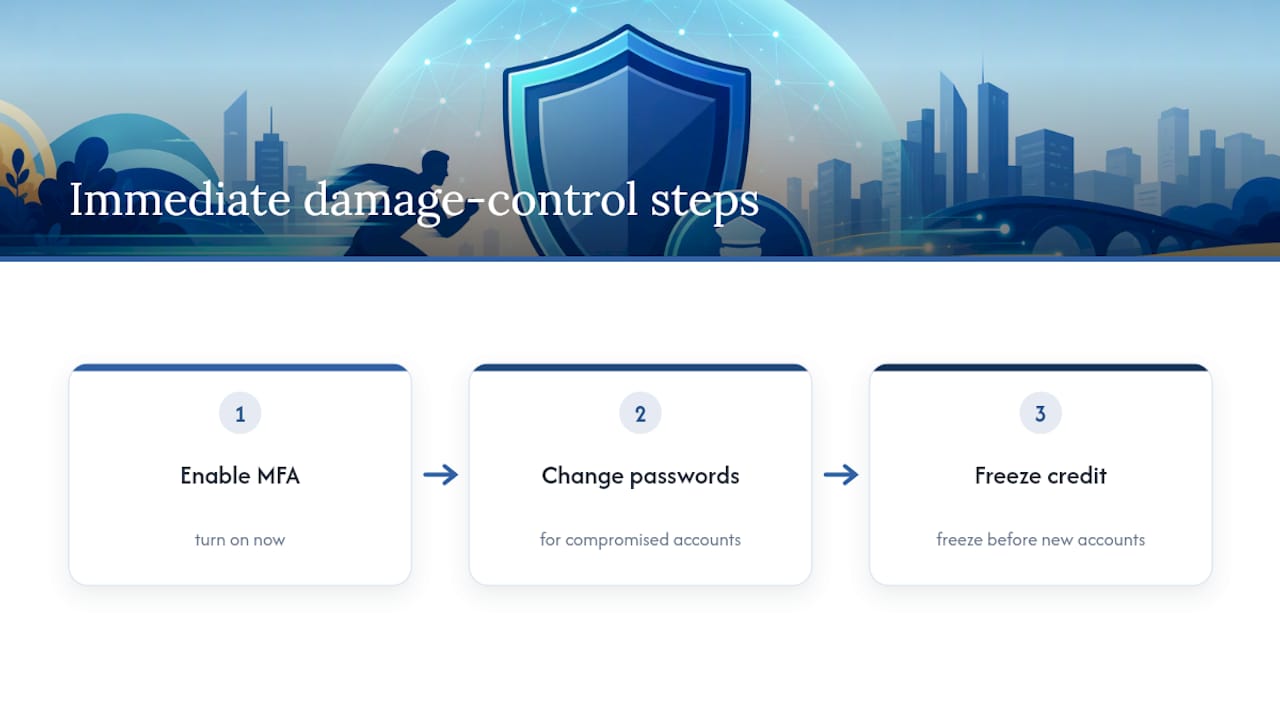
While you wait on paperwork, lock down your accounts. Turn on MFA, change every password tied to compromised accounts, and freeze your credit before you do anything else. New accounts can wait. Damage control can’t.
Tools that help you avoid a repeat identity theft
A police report and an FTC affidavit clean up the damage, but they don’t stop the next attempt. Reused passwords and exposed personal data are what let thieves strike twice, and that’s the gap worth closing once your immediate crisis is handled.

A password manager removes the weak link of reused logins, and a data removal service cuts down how much of your personal information sits on broker sites waiting to be scraped. If a compromised email account is part of your mess, a disposable inbox like YOPmail can help you separate sign-ups from your real address going forward.
- Compare options in our best password managers guide to replace weak or reused logins.
- See if a data removal service is worth it for cutting your exposure on broker sites.
- Browse VPN services reviewed and ranked if you want to secure your connection on public networks.
Sources
Start at IdentityTheft.gov for your FTC report and recovery plan. The Consumer Financial Protection Bureau covers your dispute and FCRA rights, and AnnualCreditReport.com gets you free reports from Equifax, Experian, and TransUnion.
FAQ
Will police do anything about identity theft?
Police can open an investigation, especially when you provide clear evidence like your FTC affidavit and account statements, though outcomes vary by department and case complexity. Even when no arrest follows, the filed report and case number carry legal weight with banks and credit bureaus.
What happens when you report someone for identity theft?
Filing triggers two tracks: local police may investigate the suspect if you named one, and your Identity Theft Report lets credit bureaus block fraudulent entries within four business days. Creditors also use that report to stop collection activity on the accounts you disputed.
How can I report identity theft in the US?
Start at IdentityTheft.gov to create your FTC affidavit and recovery plan, then file a police report with your local department if you know the suspect or a creditor requires one. Bring your ID, proof of address, and the printed affidavit when you go.
How do I check if my SSN is being used?
Pull your free credit reports from AnnualCreditReport.com and look for accounts or inquiries you don’t recognize. If your Social Security number was involved in a tax-related fraud, the IRS has separate procedures worth checking as well.