Here’s the fastest path: contact the site owner first, request search-engine deindexing second, then file data-broker opt-outs third. Each step does something different. The site owner removal deletes the actual content. The search-engine request hides it from Google results. The data-broker opt-outs stop the resale pipeline that keeps your information circulating in the first place.
You don’t need a lawyer or a subscription to start. You need about 45 minutes, your government ID (or a redacted version), and a clear head. Don’t panic if you find five listings or fifty. Most of this is fixable, and the tools are free.
Here’s your immediate checklist, in order:
- Audit first: Google your name in quotes, plus city or old addresses, on both Google and a secondary engine like Bing.
- Fix what you control: delete or lock down old social accounts, forum posts, and abandoned profiles.
- File with Google: use the Results about you dashboard for contact info, IDs, or doxxing content.
- Check DROP eligibility: California residents can submit one request that reaches over 600 registered brokers at once.
- Contact site owners directly: email the webmaster with the exact URL and the field you want removed.
⏱️ Expect this timeline: Google typically reviews removal requests within days and emails you a status update, per its own Search Help documentation. Data brokers registered under California’s Delete Act must complete deletion within 90 days of a valid DROP request, with progress updates every 45 days. The single biggest reason requests get denied? Missing or mismatched identity verification. Attach a photo ID or a matching email address every time you file.
Key Takeaways
The fastest path to removing your personal data online is sequencing your requests correctly: source first, search engines second, data brokers third, with follow-up checks at fixed intervals.
| Point | Details |
|---|---|
| Audit before you file | Search your name across multiple engines and check people-search sites directly before submitting requests. |
| Remove sources you control | Delete or lock old accounts and profiles before contacting third parties. |
| Request search deindexing | Use Google’s Results about you tool for contact info, IDs, and doxxing content. |
| File broker opt-outs | Use DROP if you’re a California resident, or file individually with major brokers. |
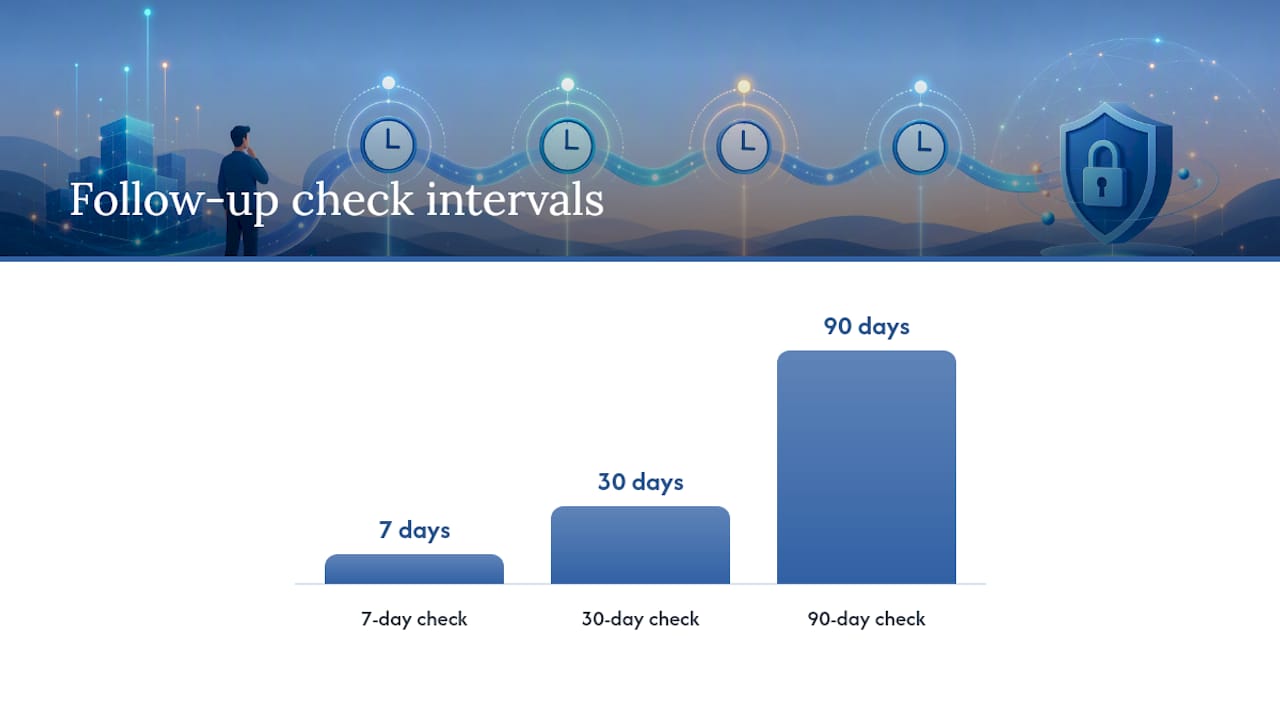
| Verify at set intervals | Check progress at 7, 30, and 90 days; re-listing is common and often requires a second pass. |
If a request goes unanswered past its expected window, escalate through the platform’s own complaint form first. For financial data misuse, the Consumer Financial Protection Bureau accepts consumer complaints, and identity-theft-related exposure can be reported through IdentityTheft.gov for a structured federal recovery plan.
Table of Contents
- How Do You Request Personal Data Deletion for Different Types of Information?
- A Step-by-Step Removal Workflow You Can Follow in One Session
- How Do You Remove Personal Information From Google Search Results?
- Major Data Brokers and People-Search Sites: How to Opt Out
- California’s DROP Platform and the Legal Rights Behind Deletion
- Copy-Paste Templates for Your Deletion Requests
- When Deletion Requests Won’t Work, and What to Do Instead
- How TechStackToday Evaluates Data-Removal Services
- Editorial Perspective: When DIY Is Enough and When to Delegate
- Official Forms and High-Value Links for Filing Your Requests
- Frequently Asked Questions
- Sources
How Do You Request Personal Data Deletion for Different Types of Information?
Not every category of personal information gets treated the same way, and knowing the difference saves you hours of frustration. Platforms and brokers generally approve removal requests for contact information: your phone number, home address, personal email, and photos of signatures or government IDs. Doxxing content (information posted with intent to harass or expose you) also tends to get fast action, especially from Google, which explicitly covers confidential government ID numbers and contact details in its removal policy.
Bank account numbers and financial identifiers fall into this same “usually removable” bucket, particularly when you can show the listing enables fraud risk.
Then there’s the category that almost never budges: public records. Court filings, property deeds, business incorporation documents, and news articles covering matters of public interest are protected under long-standing legal principles that favor public access over individual erasure. A local news story about a lawsuit you were involved in isn’t going anywhere just because you ask nicely. Corporate filings that list you as an officer or registered agent are similarly untouchable through a simple deletion request.
The line that matters most isn’t “is this embarrassing” or “is this old.” It’s “does this serve a documented public interest, or is it just commercial data-broker inventory built to sell background checks.” The first category is nearly bulletproof. The second folds under the right pressure almost every time.
Pro Tip: Before filing anything, screenshot the page showing your data and copy the exact URL. Sites change their layouts constantly, and you’ll want proof of what existed when you submit a follow-up or escalation later.
Verification requirements vary by platform, but expect most to ask for one of three things: a government-issued photo ID (sometimes with sensitive fields redacted), a selfie matching that ID, or confirmation through an email address already associated with the listing. Data brokers tend to accept looser verification, sometimes just your name and the listing URL. Search engines and legitimate site owners typically ask for more.
A Step-by-Step Removal Workflow You Can Follow in One Session
Treat this as a single afternoon project, not a months-long campaign. The order matters because each step builds leverage for the next.
- Audit everything first. Search your full name in quotes, your name plus city, your name plus old employers, and your phone number, across Google and a secondary engine like Bing or DuckDuckGo. Check archived pages using the Wayback Machine for content that’s since been altered or hidden. People-search sites like Spokeo, Whitepages, Intelius, PeopleFinders, and BeenVerified are worth searching by name directly, since they don’t always surface in a basic Google search.
- Lock down what you control. Delete old social media accounts, deactivate abandoned forum profiles, and update privacy settings on anything still active. This step matters because it removes low-hanging fruit that no third-party request can touch as effectively as you can.
- Contact the site owner or host. Email the webmaster or use the site’s contact form. Include the exact URL, the specific text or image you want removed, and proof of identity if requested. This is the highest-value step because source removal is the longest-lasting fix; a deleted page stays deleted, while a deindexed search result can still be found through direct links or other engines.
- Request search-engine removal. Once the source is gone (or if it can’t be removed), file with Google’s Results about you tool. This hides the listing from search results even when the underlying page persists.
- Submit data-broker opt-outs. Work through individual broker forms, or file once through California’s DROP platform if you’re eligible. Bulk platforms save enormous time compared to filing with each broker separately.
- Log everything and follow up. Track submission dates in a spreadsheet or notes app.
Check your progress at 7 days (has anything changed yet?), 30 days (most individual site and broker requests should show movement), and 90 days (the statutory ceiling for DROP-registered brokers). Re-listing is common enough that a single pass rarely finishes the job. If a request gets ignored past its expected window, escalate through the platform’s formal complaint channel before assuming it failed.
How Do You Remove Personal Information From Google Search Results?
Google’s Results about you dashboard is built specifically for this. You describe what you found, paste the URL, and specify why it should come down, whether that’s a phone number, home address, email, or a government ID number. For more complex cases, like content used to harass or threaten someone, Google’s detailed removal request form asks for more documentation, including screenshots of the offending page and, in the worst cases, evidence of harm.
There are real limits here, and Google is upfront about them. Content tied to a legitimate public interest, official government or business records, or professional profiles usually won’t qualify for removal even when it feels invasive to you personally. News coverage, in particular, is protected unless it violates a separate policy like harassment or explicit imagery.
Removing something from Google Search doesn’t erase it from the internet. The page still exists; it’s just harder to stumble across through a search. If your goal is actually making the information disappear, you need the source taken down too.
That distinction trips up a lot of people who think a successful Google removal means the problem is solved. It means the visibility problem is solved. The underlying page, and anyone who already has the direct link or finds it through a different search engine, can still reach it. Pair every search-engine request with an attempt at source deletion for a durable result.
Google notifies you by email once it reviews your request and reaches a decision, so check your inbox (and spam folder) over the following days rather than resubmitting prematurely.
Major Data Brokers and People-Search Sites: How to Opt Out
Data brokers operate on a different model than a news site or a forgotten blog post. They aggregate public records, purchase history, and scraped web data, then repackage it into searchable profiles they sell for background checks and marketing lists. Spokeo, Whitepages, Intelius, BeenVerified, and PeopleFinders are among the most visited, and each maintains its own opt-out form, usually buried a few clicks deep in a privacy or “do not sell” page.
Finding your listing typically means searching the site directly by name and state, since these platforms don’t reliably show up in a Google search of your name. Once you find your profile, most brokers ask for the profile URL and an email address for confirmation. Some, particularly those handling more sensitive data, may ask for a phone number or partial ID match.
Here’s how the three main removal paths stack up:
| Removal Path | Who to Contact | Verification Required | Timeline | Cost |
|---|---|---|---|---|
| Site owner takedown | Webmaster or hosting contact | Often none, sometimes ID | Days to weeks | Free |
| Search engine removal | Google (or other engine) | ID or matching email | Days | Free |
| Data broker opt-out | Individual broker or DROP | Email, sometimes ID | Up to 90 days (DROP) | Free (DIY) or paid (service) |
If you’re prioritizing where to spend your first hour, target the brokers most commonly pulled into background checks: Spokeo, Whitepages, and Intelius tend to feed into more downstream services than smaller niche sites, so removing yourself there has a bigger ripple effect.
- Search each broker by full name and state, not just your name alone.
- Copy the profile URL before starting the opt-out form; some sites remove the page mid-process.
- Use a dedicated email address for confirmation links so your primary inbox doesn’t fill up with broker correspondence.
- Screenshot the “opt-out submitted” confirmation page for your records.
Pro Tip: Set a recurring calendar reminder for 90 days out. Data brokers routinely purchase fresh data from new sources, and a large share of people who complete a full opt-out cycle find themselves re-listed within a year.
California’s DROP Platform and the Legal Rights Behind Deletion
If you live in California, the Delete Request and Opt-out Platform is the single most efficient tool available to you. Instead of filing separately with dozens of brokers, DROP lets you submit one request that reaches every broker registered with the state, over 600 of them. Eligibility runs through identity verification via the California Identity Gateway or Login.gov, a step that exists specifically to prevent someone from filing a deletion request on your behalf without your consent.

Once your request goes through, registered brokers face a hard deadline of deletion within 90 days with mandatory update cycles every 45 days to confirm compliance. That statutory backbone is what separates DROP from a polite opt-out email; brokers that ignore it face regulatory consequences, not just an annoyed customer.
Outside California, your options depend heavily on where you live and which company holds your data. Two frameworks matter most:
GDPR (General Data Protection Regulation) applies to residents of the European Union and gives you a formal “right to erasure.” Companies subject to GDPR generally must respond to a valid deletion request within 30 days, a notably tighter window than DROP’s 90-day standard, though it only applies when the company falls under EU jurisdiction.
CCPA/CPRA (California Consumer Privacy Act and its amendments) gives California residents a broader right to request deletion from any business meeting certain revenue or data-volume thresholds, not just registered data brokers. This is separate from DROP but works alongside it.
These frameworks are jurisdiction-dependent, so a request that carries legal weight in California or the EU might carry none at all elsewhere. This article offers general information, not legal advice; confirm your specific rights with your state attorney general’s office or a privacy attorney if your situation involves harassment, financial fraud, or a company refusing a legally mandated request.
Copy-Paste Templates for Your Deletion Requests
You don’t need to write these from scratch every time. Adapt the language below to fit your situation, and always attach supporting evidence, like a screenshot of the listing and the exact URL.
Template 1: Site owner or webmaster contact
- State your request clearly in the subject line: “Data Removal Request — [Your Name].”
- Identify the exact URL and the specific information you want removed (name, phone number, address, image).
- Explain briefly why removal is warranted (privacy concern, outdated information, no ongoing public interest).
- Offer verification: “I can provide a government-issued ID with sensitive fields redacted to confirm my identity if needed.”
- Set a reasonable follow-up expectation: “Please confirm receipt and let me know your expected timeline.”
Template 2: Data-broker opt-out request
- Provide your full name as it appears on the listing and any former names or addresses tied to the profile.
- Paste the direct profile URL.
- Request full deletion, not just suppression: “Please permanently delete my profile and all associated data, not simply hide it from public search.”
- Include your verification email and note you’ll follow up if you don’t receive confirmation within 30 days.
Template 3: Follow-up escalation email
- Reference your original request date and any confirmation number provided.
- State plainly that the deadline has passed without resolution.
- Ask for a specific next step or escalate to a named complaint channel if the company has one.
- Note that you’re prepared to file a complaint with a relevant regulator if the issue remains unresolved.
Attach these items whenever a platform allows file uploads:
- A screenshot of the listing showing your personal information.
- The exact URL, copied in full, not just the domain.
- A redacted photo ID where identity verification is explicitly required.
- Any prior correspondence proving you already attempted the request.
Use an aliased email address, like a service-specific alias through iCloud Hide My Email, when submitting these requests. Real-world reporting on DROP submissions found that using an alias reduces the chance your genuine email address gets harvested during the verification process and re-added to a broker’s marketing list later.
When Deletion Requests Won’t Work, and What to Do Instead
Some data simply isn’t going anywhere, and knowing this early saves you from wasted effort and false hope. Public records, court documents, property records, and professional licensing databases exist because courts and legislatures decided public access outweighs individual privacy in those specific cases. News articles covering matters of legitimate public interest, arrests, lawsuits, public statements, generally survive removal requests even years later, unless the coverage itself violated a separate policy like defamation or harassment.
A refusal isn’t always the end of the road. It usually means you need a different tool, not a stronger version of the same request.
If a page won’t come down, suppression becomes your next best option. This means pushing the unwanted result further down search rankings by building and promoting content you control, like a personal website, a well-maintained LinkedIn profile, or professional bios that Google tends to rank favorably. It’s slower than deletion, often taking months, but it works when direct removal isn’t legally available.
For copyrighted material, like a photo someone reposted without permission, a DMCA takedown notice can force removal even when a straightforward privacy request would fail, since it invokes copyright law rather than privacy policy.
Pro Tip: Before paying anyone for removal help, check whether the service is offering something you can’t do yourself for free. Legitimate providers add value through scale, monitoring, and persistence across dozens of brokers simultaneously, not through secret access you don’t have.
Consider a paid removal service when your exposure is large (dozens of broker listings rather than a handful), when re-listing keeps happening faster than you can manually track it, or when the exposure involves safety concerns like doxxing or stalking that make DIY follow-up genuinely risky. Services like Optery and DeleteMe build their entire product around continuous monitoring and repeated resubmission, which matters because a one-time opt-out often isn’t a one-time fix.
How TechStackToday Evaluates Data-Removal Services
Techstacktoday runs hands-on testing against real broker lists rather than relying on marketing claims from the services themselves. That means submitting actual removal requests, tracking how long each service takes to confirm a listing is down, and rechecking those same listings weeks later to see whether the data quietly reappears.
Four metrics carry the most weight in that process: speed of initial removal, breadth of broker coverage, how cleanly a service handles identity verification without over-collecting personal data, and repeatability, meaning whether a removal holds up on a second and third check rather than reverting.
Coverage numbers on a company’s marketing page mean very little if a service can’t actually get a listing removed within a reasonable window, or if the same listing reappears a month later because the service never rechecked it.
Editorial Perspective: When DIY Is Enough and When to Delegate
Most people reading this can handle the entire process themselves in an afternoon, and honestly, most should try before paying anyone. The only real cost is your time, and the return on that time is substantial: you’re removing the raw material that fuels spam calls, phishing attempts, and background-check profiles you never consented to.
Delegation starts making financial sense once the scope outgrows what a reasonable person can track manually. If you’re finding your information scattered across 30 or more brokers, if listings keep reappearing within weeks of removal, or if you’re dealing with a doxxing situation where speed and persistence matter more than saving a subscription fee, a dedicated service earns its cost. The verification hurdles alone, chasing down twenty different broker forms with twenty different documentation requirements, are where DIY effort starts producing diminishing returns.
The honest cost-benefit line isn’t about laziness. It’s about exposure size and risk tolerance. A single outdated Whitepages listing doesn’t justify a monthly subscription. Fifty listings across brokers that resell to each other, refreshing every few months, absolutely does.
Official Forms and High-Value Links for Filing Your Requests
Bookmark these before you start, since you’ll likely revisit each one more than once during a full removal cycle.
Every removal path solves a different problem: Google’s tool suppresses visibility, DROP forces broker-level deletion, and consumer complaint portals give you an escalation path when a company simply ignores you.
| Resource | Best For |
|---|---|
| Google Results about you | Removing search results showing contact info or IDs |
| California DROP | Bulk broker deletion for California residents |
| Identitytheft | Recovery planning after identity misuse |
| CFPB complaint portal | Escalating financial data misuse |
For a broader walkthrough of long-term privacy habits beyond this immediate cleanup, Techstacktoday’s guide on removing yourself from the internet covers ongoing monitoring and account hygiene. If your exposure is large enough that DIY tracking feels unmanageable, our breakdown of whether a data removal service is worth it walks through real cost-benefit math before you commit to a subscription. Sites managing their own contact and takedown processes, like this example privacy policy, also show what a legitimate site-owner contact page typically looks like when you’re trying to identify who to email.
This article provides general information, not legal advice. Deletion rights and timelines vary by jurisdiction and platform; confirm current rules with the official source or a qualified privacy attorney for your specific situation.
Frequently Asked Questions
How long does it take to request personal data deletion successfully?
Timelines vary by platform. Google typically reviews Results about you submissions within days and emails a status update. Data brokers registered under California’s DROP must complete deletion within 90 days, with progress checks every 45 days. Individual site owners can range from same-day to several weeks depending on responsiveness.
Does removing a search result delete the actual data?
No. Google removal only affects what shows up in Google Search results; the original page or listing still exists unless you separately contact the site hosting it. Pairing search removal with a direct source takedown request gives the most durable result.
What information usually can’t be removed?
Public records, court filings, corporate registration documents, and news coverage tied to legitimate public interest are generally protected and won’t be removed through a standard deletion request, even when the content feels outdated or unflattering.
Is California DROP available if I don’t live in California?
No, DROP eligibility requires verification as a California resident through the California Identity Gateway or Login.gov. Residents of other states or countries need to rely on individual broker opt-outs or applicable regional frameworks like GDPR for EU residents.
Should I pay for a data removal service?
It depends on scope. If you’re managing a handful of listings, DIY templates and free tools handle most cases. Paid services become worthwhile when you’re facing dozens of listings, persistent re-listing, or safety concerns that make manual tracking risky.
This article is general information, not a substitute for advice from a qualified lawyer. Consult a qualified legal professional about your own circumstances before acting on anything here.
Sources
- California Department of Justice — Delete Act (DROP)
- Find and remove personal info in Google Search results – Google Search Help
- California Privacy Protection Agency — Delete Request and Opt-out Platform (DROP)