Protecting your identity after a data breach means taking immediate, concrete steps to stop fraud before it starts. A breach exposes your personal information, including passwords, Social Security numbers, and financial account details, to criminals who act fast. The standard industry term for what follows is post-breach identity protection, a structured response that combines credit freezes, account security, and ongoing monitoring. Resources like the FTC’s IdentityTheft.gov and the three major credit bureaus, Equifax, Experian, and TransUnion, are your first official stops. Don’t panic. Act now.
What immediate steps should you take to protect identity after a data breach?
The first 24 hours after a breach are the most critical. New account fraud is the most common form of identity theft following a breach, and a credit freeze is the primary defense against it.
Here are the four actions to take right now:
-
Change your email password first. Your email is the master key to every other account. If a thief controls your inbox, they can reset every password you own. Use a unique, strong password you have never used before. A password manager stores and generates these securely so you do not have to memorize them.
-
Enable multi-factor authentication (MFA) on all key accounts. MFA adds a second security layer, requiring more than just a password to access your accounts. Turn it on for email, banking, and any account tied to your Social Security number or financial data.
-
Place a credit freeze at all three bureaus separately. A free credit freeze at Equifax, Experian, and TransUnion blocks new credit lines from being opened in your name. Credit freezes do not affect your credit score and stay in place until you lift them manually. You must contact each bureau individually. Assuming one freeze covers all three is a costly mistake.
-
Save your freeze PINs and confirmation numbers. You will need these to temporarily lift freezes when you apply for credit. Store them in a secure location, not in your email inbox.
Pro Tip: Prioritize accounts in this order: email, bank accounts, retirement accounts, then everything else. Securing your email first cuts off the thief’s ability to reset passwords on every other account.
How can you monitor your financial accounts to detect fraud early?

Monitoring is your early warning system. It does not prevent fraud, but it catches it fast. Credit monitoring alerts you after fraudulent activity occurs, which is why it works best alongside a credit freeze, not instead of one.
Set up these monitoring habits immediately:
- Pull your credit reports. Visit AnnualCreditReport.com to check reports from all three bureaus. Look for accounts you did not open, hard inquiries you did not authorize, and addresses you do not recognize.
- Set up fraud alerts. Contact any one of the three major bureaus to place a fraud alert. That bureau is required to notify the other two. A fraud alert tells lenders to take extra steps to verify your identity before opening new credit.
- Review bank and credit card statements weekly. Do not wait for your monthly statement. Log in and scan for small, unfamiliar charges. Thieves often test stolen card data with small transactions before making larger ones.
- Watch for unexpected bills or collection calls. Receiving a bill for a service you never signed up for is a key warning sign of identity theft. Do not ignore it.
- Check your Social Security earnings record. Log into SSA.gov and verify that no one has reported income under your Social Security number from an employer you do not recognize.
Understanding the difference between monitoring and prevention matters. Monitoring is an early warning, not a shield. A credit freeze is the shield.
Which tools and resources help you recover after identity theft?
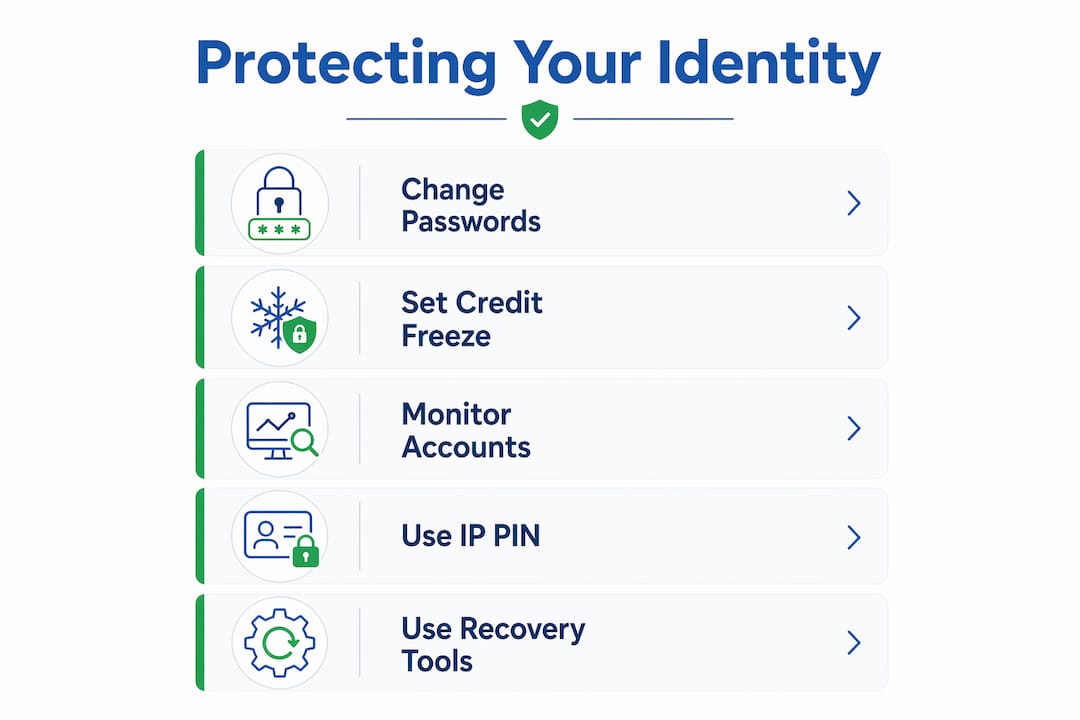
Several specialized tools exist specifically for post-breach recovery. Knowing which ones to use, and how, saves you time and protects you from overlooked threats.
| Tool | What it does | Where to get it |
|---|---|---|
| IRS Identity Protection PIN | Prevents fraudulent tax returns filed in your name | IRS.gov/ippin |
| IdentityTheft.gov | Creates a personalized recovery plan and official FTC report | IdentityTheft.gov |
| Credit freeze | Blocks new credit accounts from being opened | Equifax, Experian, TransUnion |
| Identity protection services | Monitors dark web, data brokers, and financial accounts | Reviewed at Techstacktoday |
| Data broker removal | Removes your personal info from public search databases | Techstacktoday.com |
The IRS Identity Protection PIN (IP PIN) is one of the most overlooked tools after a breach. Without an IP PIN, a thief can file a fraudulent tax return in your name and collect your refund. The IP PIN is free and available through the IRS online portal. Request one even if you have not seen signs of tax fraud yet.
IdentityTheft.gov is the FTC’s official recovery portal. It generates a step-by-step recovery plan tailored to your specific situation, pre-fills dispute letters for creditors, and creates an official report you can share with banks and law enforcement. Document every interaction with dates, names, and reference numbers. These records are critical if disputes escalate.
Identity protection services that include automatic data broker removal reduce your online exposure by pulling your personal information from public databases. These services complement your core defenses but do not replace credit freezes or account security steps.
Pro Tip: Request your IRS IP PIN every january before tax season. The IRS issues a new one each year, and using last year’s number will cause your return to be rejected.
How do you protect children and seniors from identity theft after a breach?
Vulnerable family members face unique risks. Children and seniors are frequently targeted because their credit activity is low, making theft harder to detect quickly.
Protecting minors
Children’s credit should be checked and frozen proactively because identity theft involving minors often goes undetected for years. A child has no reason to apply for credit, so no one checks. By the time the theft is discovered, the damage can span a decade.
Watch for these warning signs of child identity theft:
- Your child receives credit card offers or bills in their name
- A lender denies credit to your child based on existing negative history
- The IRS rejects your tax return because your child’s Social Security number was already used
- Collection agencies call about debts in your child’s name
To freeze a minor’s credit, submit a written request to each of the three major bureaus with proof of your identity and your child’s identity, such as a birth certificate and Social Security card. Each bureau has a specific process, so check their websites directly.
Protecting seniors
Seniors face a different set of risks. They are more likely to be targeted through phone scams, Medicare fraud, and caregiver exploitation. Tailored monitoring for older adults includes watching for unexpected Medicare Explanation of Benefits statements, unfamiliar medical bills, and changes to Social Security direct deposit information.
Best practices for protecting a senior family member include:
- Placing a credit freeze on their accounts, even if they are not actively using credit
- Setting up account alerts on all financial accounts so you receive notifications of activity
- Reviewing their credit reports quarterly
- Reporting any suspected misuse to the FTC at ReportFraud.ftc.gov and to local law enforcement
Keep dated records of every step you take. If disputes escalate to law enforcement or financial institutions, detailed recovery records are what move cases forward.
Key Takeaways
A credit freeze at all three major bureaus is the single most effective action you can take to protect your identity after a data breach.
| Point | Details |
|---|---|
| Freeze credit at all three bureaus | Contact Equifax, Experian, and TransUnion separately; one freeze does not cover all three. |
| Change email password first | Your email controls password resets for every other account, making it the highest priority. |
| Use IdentityTheft.gov for recovery | The FTC portal creates a personalized plan and pre-fills dispute letters for creditors and banks. |
| Request an IRS IP PIN | This free tool blocks fraudulent tax returns filed in your name before tax season begins. |
| Monitor and document everything | Keep dated records of all recovery steps; they are critical if disputes reach law enforcement. |
Why credit freezes beat monitoring every time
After reviewing dozens of identity protection cases and testing services at Techstacktoday, one pattern is clear: people who freeze their credit first recover faster and lose less. Those who rely only on monitoring alerts often find out about fraud weeks after a new account was opened, by which point the damage is done.
The credit freeze is not glamorous. It takes about 15 minutes per bureau and requires you to manage PINs. But it is the only tool that stops new account fraud before it happens. Monitoring tells you the barn door is open. A freeze keeps it locked.
The other mistake I see constantly is people treating IdentityTheft.gov as optional. It is not. That recovery plan is the difference between a disorganized, months-long dispute process and a structured case with documentation that banks and credit bureaus actually respond to. Use it from day one.
Stay updated on new threats too. Tax identity theft, medical identity theft, and synthetic identity fraud are all growing. The data breach recovery steps that worked in 2022 need to be revisited. New tools like the IRS IP PIN exist precisely because the threat has evolved.
— TechStackTeam
Techstacktoday’s top-tested privacy tools for identity protection
Your credit freeze and account security steps are your foundation. A VPN adds a critical layer on top by encrypting your internet traffic and preventing your data from being intercepted on public or unsecured networks.

Techstacktoday has hands-on tested and ranked over 50 privacy services, including VPNs, data removal tools, and password managers, with no paid rankings influencing the results. If you want to know which VPN services actually protect your connection and which ones fall short, the reviews are built on real-world performance data. For readers who want to go further, the internet privacy tools checklist maps out every layer of protection worth considering in 2026.
FAQ
What is the first thing to do after a data breach?
Change your email password immediately and enable multi-factor authentication. Then place a credit freeze at Equifax, Experian, and TransUnion to block new fraudulent accounts.
Does a credit freeze hurt my credit score?
No. A credit freeze does not affect your score and stays in place until you lift it manually. You can temporarily lift it when you need to apply for credit.
What is an IRS IP PIN and do I need one?
An IRS Identity Protection PIN is a six-digit code that prevents anyone else from filing a tax return using your Social Security number. Request one free at IRS.gov/ippin, especially after a breach.
How do I protect my child’s identity after a breach?
Submit a written request with proof of identity to each of the three major credit bureaus to freeze your child’s credit. Check for any existing credit activity in their name first.
Is credit monitoring enough to protect my identity?
No. Monitoring alerts you after fraud occurs but does not stop it. Use it alongside a credit freeze, not as a replacement.