Identity monitoring is the continuous, proactive tracking of your personally identifiable information across credit files, public records, financial accounts, and the dark web to detect early signs of identity theft. The Consumer Financial Protection Bureau (CFPB) defines this practice as scanning multiple data sources for unusual activity that could signal someone is misusing your personal data. Services like Experian and IdentityForce scan billions of records on your behalf and alert you when something looks wrong. Pricing ranges from a few dollars per month to more than $15 monthly depending on coverage depth. Think of it as an early-warning system. It does not stop theft from happening, but it shortens the time between exposure and your response.
What is identity monitoring and what types of alerts does it send?
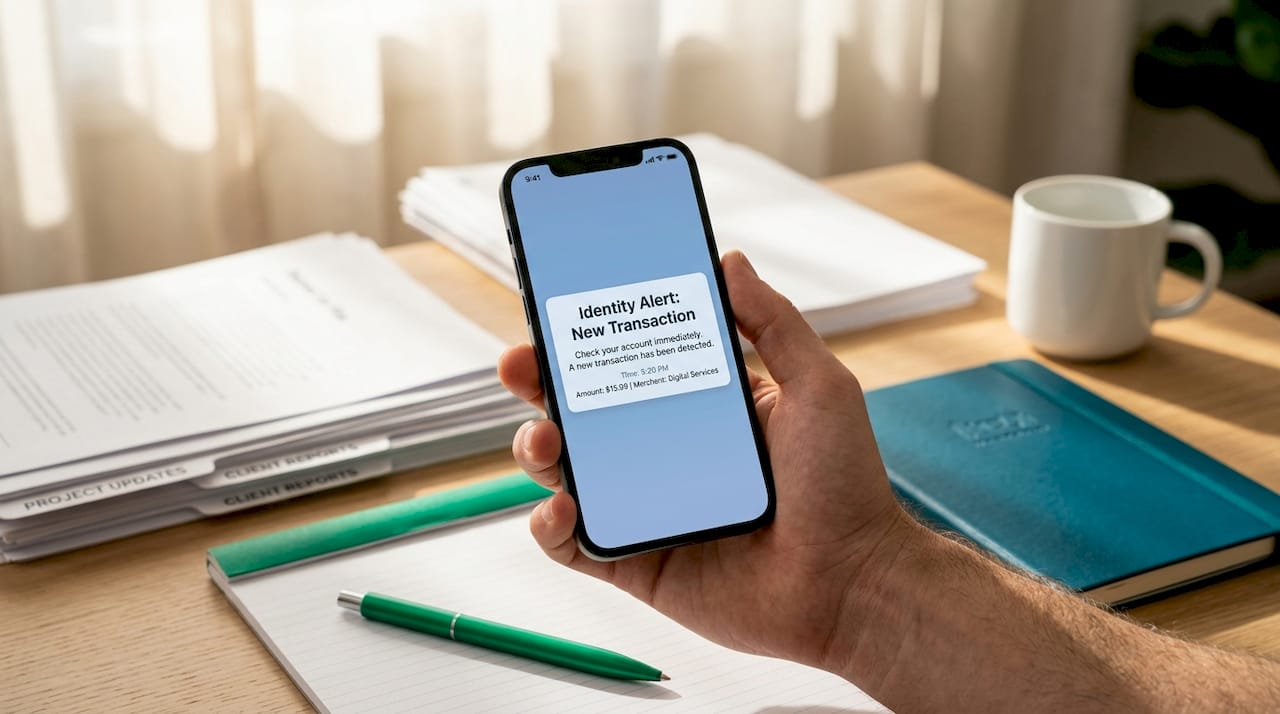
Identity monitoring services generate several distinct categories of alerts. Each one targets a different layer of your personal data. Knowing which alert type you received tells you exactly what kind of threat you are facing and what to do next.
Here are the main types of identity monitoring alerts you should expect from any reputable service:
- Credit file alerts: These notify you when a new credit inquiry, new account, or derogatory mark appears on your reports at Equifax, Experian, or TransUnion. Credit monitoring is regulated under the Fair Credit Reporting Act (FCRA), which means the data these alerts draw from is standardized and legally protected.
- Dark web alerts: Experian alone scans over 600,000 dark web pages daily looking for your Social Security number, email address, or financial account numbers. When your data appears on underground forums or marketplaces, you get an alert.
- Public records and court monitoring: Address changes, criminal filings, or new court judgments tied to your name trigger these alerts. Fraudsters sometimes use stolen identities to create false legal records.
- Financial account alerts: Suspicious transactions, new account openings, or large withdrawals linked to your bank or investment accounts generate near-real-time notifications.
- Social media and email monitoring: Premium plans watch for your personal details appearing in data dumps or being used to create fake profiles.
One thing every alert type has in common: the alert tells you something happened. It does not fix it. Monitoring detects suspicious activity and notifies you. Remediation is a separate process entirely.
Pro Tip: Set your alert delivery preferences to both SMS and email from day one. Financial transaction alerts can arrive in near real time, but dark web scan alerts may take 24 to 48 hours. Knowing the latency of each alert type helps you calibrate your response urgency.
How does identity monitoring work behind the scenes?
Understanding the mechanics helps you set realistic expectations. Here is what actually happens from the moment you enroll to the moment you receive an alert.
- Data enrollment: You submit your key personal identifiers. This typically includes your Social Security number, date of birth, email addresses, phone numbers, bank account numbers, and passport or driver’s license numbers. The more identifiers you provide, the broader your coverage.
- Continuous scanning: The service runs automated scans across its data sources on a rolling basis. Credit bureau data updates when creditors report it, usually monthly. Dark web scans run daily. Financial transaction monitoring can be near real time.
- Alert matching: The system compares newly detected data against your enrolled identifiers. When a match is found, it is flagged and prioritized based on risk level.
- Notification delivery: You receive the alert via email, SMS, or a mobile app. Most services like Experian IdentityWorks and LifeLock use all three channels simultaneously for high-risk alerts.
- Your response: This is the step most people miss. You must act on the alert. The service does not contact creditors, file disputes, or freeze your credit on your behalf unless you have a plan that includes assisted resolution.
“Identity monitoring is an early-warning system designed to enable faster consumer response to threats, not a guarantee against identity theft.” — CFPB
The FCRA governs how credit bureaus collect and share your data, which gives credit file monitoring a legal backbone. Alert latency varies by source: financial transactions can produce near-real-time alerts, while dark web scans may take up to 24 to 48 hours. That gap matters when you are trying to stop fraud in progress.
Identity monitoring vs credit monitoring: what is the real difference?
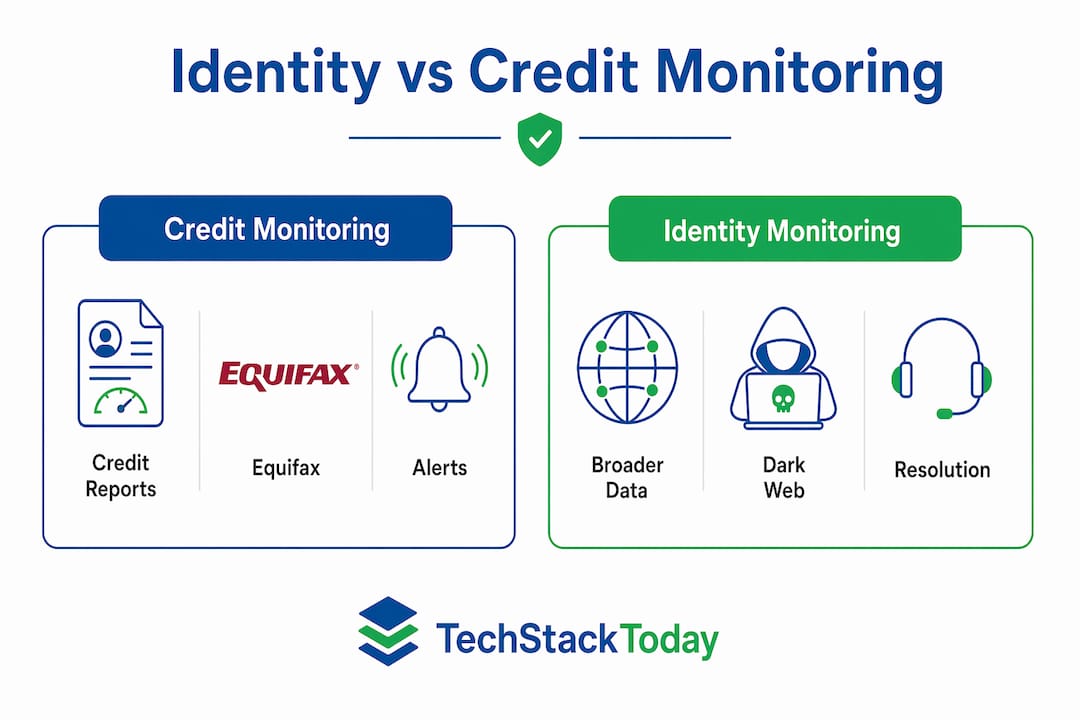
These two terms get used interchangeably, but they are not the same thing. Confusing them leads people to buy the wrong level of protection.
| Feature | Credit monitoring | Identity monitoring | Identity monitoring + resolution |
|---|---|---|---|
| Credit file alerts (Equifax, Experian, TransUnion) | ✅ Yes | ✅ Yes | ✅ Yes |
| Dark web scanning | ❌ No | ✅ Yes | ✅ Yes |
| Public records monitoring | ❌ No | ✅ Yes | ✅ Yes |
| Financial account alerts | ❌ No | ✅ Varies by plan | ✅ Yes |
| Fraud dispute assistance | ❌ No | ❌ No | ✅ Yes |
| Identity theft insurance | ❌ No | ❌ No | ✅ Yes (up to $1M on some plans) |
| Credit freeze capability | ❌ No | ❌ No | ✅ Some plans |
Credit monitoring watches one slice of your identity: your credit file. Identity monitoring covers a much wider surface area, including the dark web, public records, and financial accounts. Neither one prevents fraud from occurring. A credit freeze is legally free and actually blocks new fraudulent accounts from being opened in your name. That is prevention. Monitoring is detection. You need both working together.
Monitoring coverage varies widely by provider. Premium plans bundle alerting with resolution support, which means a dedicated specialist helps you dispute fraudulent accounts and recover your identity. Basic plans just send you alerts and leave the rest to you.
Pro Tip: Before you pay for any identity protection service, check whether your existing bank, credit card issuer, or employer already provides free credit or identity monitoring as a benefit. Many do, and you may be doubling up without realizing it.
How to set up identity monitoring alerts effectively
Getting started takes less than 30 minutes. The challenge is not setup. It is choosing the right plan and knowing what to do when an alert arrives.
- Choose your service tier. Decide whether you need basic credit monitoring, full identity monitoring, or a plan with assisted resolution. If you have experienced fraud before or have dependents to protect, go with a plan that includes resolution support. Review the best identity protection services to compare coverage, alert types, and pricing side by side.
- Enroll all your identifiers. Do not just enter your Social Security number and stop. Add every email address, phone number, and financial account you actively use. More identifiers mean more coverage.
- Configure your notification preferences. Enable SMS, email, and in-app alerts. Set high-priority alerts (new credit accounts, Social Security number exposure) to trigger immediate SMS notifications.
- Connect your financial accounts. Services that offer financial transaction monitoring require you to link your bank and credit card accounts. This step is optional on most platforms but significantly expands your protection.
- Set a monthly review habit. Alerts catch real-time threats, but pairing monitoring with regular credit reviews and fraud alerts covers different stages of identity theft. Pull your free credit reports from AnnualCreditReport.com every few months and cross-check them against your alert history.
The most common mistake people make after setup is ignoring low-priority alerts. A soft inquiry you do not recognize today can be the first step in a larger fraud scheme. Treat every alert as worth a 60-second review. If you want to go further, learn how to remove yourself from the internet to reduce the amount of personal data available for fraudsters to exploit in the first place.
Pro Tip: After enrolling, test your alert system by checking whether a known recent credit inquiry appears in your dashboard. If it does not show up within 48 hours, contact support. A silent system is not a safe system.
What additional benefits do identity monitoring services provide?
The best identity monitoring tools go well beyond sending you alerts. Here is what separates a basic plan from a genuinely protective service:
- Dark web monitoring depth: Dark web alerts shorten the time between a data breach and your awareness of it. The data cannot be erased from the dark web, but knowing it is out there lets you change passwords, freeze accounts, and place fraud alerts before damage escalates.
- Identity theft insurance: Many premium plans include $1 million in identity theft insurance to cover legal fees, lost wages, and out-of-pocket recovery costs. This is not a marketing gimmick. Recovery from serious identity theft can take hundreds of hours and thousands of dollars.
- Assisted resolution specialists: Some services assign a dedicated case manager who handles creditor disputes, IRS fraud claims, and credit bureau corrections on your behalf. This feature alone can justify the cost of a premium plan.
- Non-credit source monitoring: Court records, sex offender registries, address change filings, and social media scans catch fraud that never touches your credit file. Medical identity theft, for example, rarely shows up in credit monitoring.
- Integration with password managers and VPNs: Services like Norton 360 with LifeLock bundle identity monitoring with a password manager and VPN in a single subscription. This layered approach covers credential theft, network interception, and identity fraud under one plan.
The right combination of these features depends on your personal risk profile. Someone who has already had their data exposed in a breach needs dark web monitoring and resolution support. Someone starting fresh needs solid credit file monitoring and a credit freeze in place.
Key takeaways
Identity monitoring is a detection tool, not a prevention shield. Its value comes from speed: the faster you know, the faster you can act to limit damage.
| Point | Details |
|---|---|
| Core definition | Identity monitoring tracks your personal data across credit files, dark web, and public records for signs of theft. |
| Alerts vs. remediation | Alerts notify you of threats. Fixing the damage requires a separate resolution process or assisted plan. |
| Credit freeze distinction | A credit freeze is free and prevents new fraudulent accounts. Monitoring detects threats but does not block them. |
| Setup priority | Enroll all identifiers, enable SMS and email alerts, and pair monitoring with regular credit report reviews. |
| Plan selection | Choose plans with assisted resolution if you want help beyond alerts, especially after a known data breach. |
The honest reality about identity monitoring
I have reviewed dozens of identity protection services at Techstacktoday, and the pattern I see most often is this: people sign up, receive their first alert, and then freeze. They do not know what to do next because they assumed the service would handle it.
That assumption is the most dangerous one in personal security. Monitoring alerts require your proactive response. The service is a sensor, not a shield. When the alarm goes off, you still have to call the fire department.
The other thing I have noticed is alert fatigue. After a few weeks of low-priority notifications, people start dismissing alerts without reading them. That is exactly when real fraud slips through. The fix is simple: configure your alerts so that only high-priority events trigger SMS. Save email for the routine stuff. That way, a buzz on your phone still means something.
Dark web monitoring is the feature most people underestimate. Your credit file looks clean right up until the moment a fraudster uses your stolen credentials to open six accounts in one afternoon. Dark web monitoring is what catches the data sitting in criminal hands before that moment arrives. It is not perfect, but it covers a blind spot that credit monitoring completely misses.
My honest recommendation: treat identity monitoring as one layer in a stack, not the whole stack. Pair it with a credit freeze at all three bureaus, strong unique passwords managed through a dedicated tool, and annual reviews of your full credit reports. That combination gives you detection, prevention, and recovery capability working together.
— TechStackTeam
Protect yourself with Techstacktoday’s tested recommendations
You now know what identity monitoring does, how it works, and what to look for in a plan. The next step is picking the right service for your situation.
Techstacktoday has hands-on tested and ranked the leading identity protection services based on alert coverage, response speed, resolution support, and real-world performance. No paid rankings. No sponsored placements. Just honest assessments you can trust. Whether you need a standalone monitoring plan or a full bundle with VPN and password management, the reviews are updated regularly so you always see current pricing and features. Start with the identity protection category to find the plan that fits your risk level and budget.
FAQ
What is identity monitoring in simple terms?
Identity monitoring is a service that continuously scans your personal information across credit files, dark web sites, and public records, then alerts you when suspicious activity is detected. It is an early-warning system, not a prevention tool.
How is identity monitoring different from credit monitoring?
Credit monitoring only watches your credit reports at Equifax, Experian, and TransUnion. Identity monitoring covers a broader range of sources including the dark web, public records, and financial accounts, giving you a wider view of potential threats.
Does identity monitoring stop identity theft?
No. Identity monitoring detects unusual activity and alerts you. It does not block fraud or resolve theft on your behalf. Plans with assisted resolution add that capability, but the core monitoring function is detection only.
How do I set up identity monitoring alerts?
Enroll in a service, submit all your personal identifiers including email addresses and financial account numbers, and enable both SMS and email notifications. Pair the service with a free credit freeze at all three bureaus for stronger protection.
What does dark web monitoring actually do?
Dark web monitoring scans hidden websites inaccessible through standard search engines to find your personal data being traded or sold by criminals. It cannot remove your data from the dark web, but it alerts you quickly so you can take protective action before fraud occurs.