The dark web is defined as the encrypted, anonymous layer of the internet where stolen personal data is bought, sold, and weaponized for identity theft. The role of dark web in identity theft is not minor. Over 65% of monitored illicit activity on the dark web involves identity crimes. That single statistic tells you everything about the scale of the threat. Your Social Security number, bank credentials, and medical records can all end up in a criminal marketplace without you ever knowing. Understanding how this works is the first step toward protecting yourself.
How does the dark web enable identity theft?
The dark web operates through anonymizing software called Tor, which routes internet traffic through multiple encrypted relays. This makes it nearly impossible to trace who is buying or selling stolen data. Criminal networks use this cover to run full-scale marketplaces that function like underground versions of Amazon or eBay.
These marketplaces are not crude or disorganized. Dark web vendors operate professionally, complete with seller ratings, customer support chat, and replacement guarantees for invalid or blocked data. If a stolen credit card number gets flagged before a buyer uses it, some vendors will replace it. That level of service makes the ecosystem reliable enough to attract repeat criminal buyers.

The most valuable product sold is called a “fullz.” This is a complete identity package containing your name, Social Security number, date of birth, address, and financial account details. Criminals use fullz to open fraudulent loans, file fake tax returns, or apply for government benefits in your name.
Before any stolen data reaches a buyer, it goes through validation. Credential checkers test stolen accounts live to confirm they still work, then price them accordingly. Valid, freshly stolen credentials sell for more. Expired or flagged data gets bundled and sold cheap in bulk.
- Dark web forums serve as meeting places where criminals share techniques, sell data, and recruit for fraud operations.
- Autoshops are automated storefronts where buyers purchase stolen card data instantly, without human interaction.
- Escrow services protect criminal transactions, just like PayPal protects legitimate purchases.
- Resale cycles mean your data can be sold, repackaged, and resold multiple times over several years.
Pro Tip: If you receive an alert that your email appeared in a data breach, treat it as urgent. Criminals often test breached credentials within hours of a leak going live.
What types of personal data are traded on the dark web?
Stolen data on the dark web falls into several distinct categories, each with its own price and criminal use case. Understanding what is being traded helps you recognize what to protect most aggressively.
| Data Type | Approximate Price | Common Criminal Use |
|---|---|---|
| Social Security number | A few dollars | Tax fraud, loan applications |
| Full identity package (fullz) | $20 to $100+ | Account takeover, credit fraud |
| Credit card details | Varies by limit | Unauthorized purchases |
| Login credentials | Low to moderate | Account takeover, resale |
| Medical records | Higher value | Insurance fraud, prescription fraud |
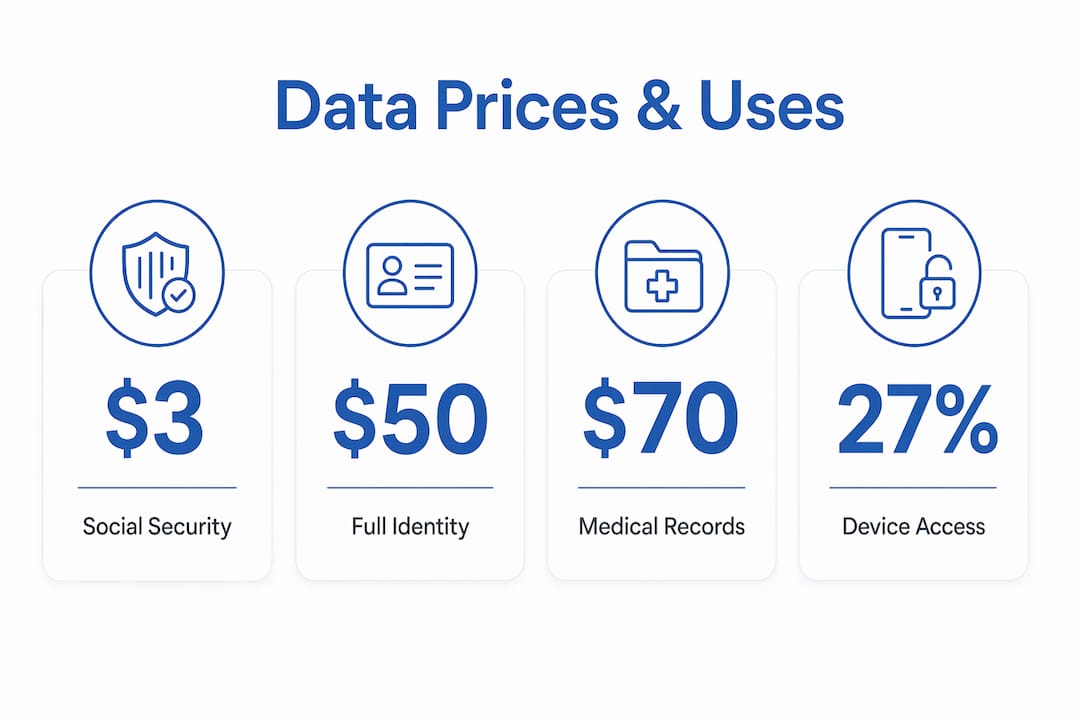
Medical records carry a higher price because they contain multiple identity data points in one file. A single medical record can include your name, insurance ID, date of birth, and home address. Criminals use that combination to file fraudulent insurance claims or obtain prescription drugs.
The most dangerous modern collection method is infostealer malware. This software installs silently on your device and harvests stored passwords, session cookies, and autofill data without triggering any visible alert. You never see it happen. The data goes directly to a criminal server and then to a dark web marketplace.
Unauthorized device access increased 78% year over year in 2026, now accounting for 27.2% of all identity compromises. That means hacked devices have surpassed traditional phishing scams as the leading source of stolen identity data. The threat has shifted from your inbox to your device.
Criminals also combine data from multiple sources. Leaked passwords, phishing results, AI-generated messages, and social media data get merged to create convincing fraud attempts. A criminal who knows your name, employer, and neighborhood can craft a targeted scam that feels completely legitimate.
What happens if your information is found on the dark web?
Finding your data on the dark web does not mean fraud has already occurred. It means your risk level has permanently increased. Stolen information circulates and resells for years after the initial breach. You cannot remove it once it is there.
The types of fraud you face after dark web exposure include:
- New account fraud: Criminals open credit cards, loans, or utility accounts in your name.
- Tax identity theft: A fraudulent return gets filed using your Social Security number to claim your refund.
- Medical identity theft: Someone uses your insurance details to receive care or medications.
- Account takeover: Criminals log into your existing bank or email accounts using stolen credentials.
- Synthetic identity fraud: Your real data gets combined with fabricated details to create a new false identity.
The complexity of modern identity crime is significant. 25.6% of identity theft victims manage two or more separate identity incidents at the same time. That means you could be dealing with a fraudulent tax return while someone else is opening a credit card in your name. Tracking multiple incidents simultaneously is exhausting and disorienting.
“Having data on the dark web does not guarantee immediate fraud, but it creates an elevated risk state that requires long-term vigilance, not a one-time fix.” — Identity Theft Resource Center
The emotional weight of this situation is real. Anxiety, distrust, and a sense of violation are common reactions. Knowing what you are dealing with helps you respond with clarity instead of panic. Check your identity theft warning signs regularly so you catch problems early.
How can you protect yourself from dark web identity theft?
Protecting yourself requires layered action, not a single fix. No one step eliminates the risk. But combining several defenses makes you a much harder target.
-
Freeze your credit. Contact Equifax, Experian, and TransUnion directly to place a credit freeze. This blocks new credit accounts from being opened in your name, even if a criminal has your Social Security number. It costs nothing and takes minutes.
-
Use a password manager. Reusing passwords across sites is one of the fastest ways to lose multiple accounts after a single breach. A trusted password manager generates and stores unique, complex passwords for every account. You only remember one master password.
-
Enable multi-factor authentication (MFA). MFA requires a second verification step beyond your password. Even if a criminal buys your login credentials on the dark web, they cannot access your account without the second factor. Use an authenticator app rather than SMS when possible.
-
Monitor your financial accounts weekly. Set up transaction alerts on every bank and credit card account. Unusual charges are often the first visible sign of fraud. Catching them fast limits the damage.
-
Scan your devices for malware. Run reputable antivirus and anti-malware software regularly. Infostealer malware is the primary tool criminals use to harvest credentials directly from devices. Keeping your device clean cuts off that supply chain.
-
Limit your public data footprint. Remove your personal information from data broker sites. The less data available about you publicly, the less material criminals have to build a convincing fraud profile. Techstacktoday’s guide on removing yourself from the internet walks through this process step by step.
-
Sign up for dark web monitoring. Identity protection services scan dark web forums and marketplaces for your personal information. Early alerts give you time to act before fraud occurs.
Pro Tip: Set a calendar reminder every three months to check your credit reports at AnnualCreditReport.com. Rotating through Equifax, Experian, and TransUnion gives you near-continuous coverage throughout the year.
Key Takeaways
The dark web functions as a professional criminal marketplace where your stolen personal data is sold, validated, and exploited for identity fraud that can persist for years without a layered defense.
| Point | Details |
|---|---|
| Dark web scale | Over 65% of monitored dark web activity involves identity theft crimes. |
| Fullz pricing | Complete identity packages sell for $20 to $100+, making them affordable for criminals. |
| Device hacking surges | Unauthorized device access rose 78% year over year, now the top source of stolen data. |
| Ongoing exposure risk | Stolen data circulates for years, creating permanent elevated risk after any breach. |
| Multi-layer defense works | Combining credit freezes, MFA, password managers, and monitoring reduces your exposure significantly. |
The dark web threat is not going away. Here is what I have learned.
After reviewing dozens of identity protection services and tracking dark web trends closely, one thing stands out clearly. Most people treat identity theft as a one-time event to resolve and move on from. The dark web makes that mindset dangerous.
Your data does not expire once it is listed for sale. It gets repackaged, recombined, and resold. A breach from three years ago can fuel a fraud attempt today. The criminals running these marketplaces are not amateurs. They run structured businesses with quality controls, customer service, and repeat buyers. Treating them as disorganized hackers underestimates the actual threat.
The readers who fare best are the ones who build a multi-layer security approach and maintain it consistently. Not because they are paranoid, but because they understand that vigilance is now a basic cost of living online. One password manager, one credit freeze, and one monitoring service are not overkill. They are the minimum.
Do not let the complexity of the problem paralyze you. Start with one step today. Freeze your credit. Enable MFA on your email. The goal is not perfection. The goal is making yourself a harder target than the person who does nothing.
— TechStackTeam
What Techstacktoday recommends for identity protection
Knowing the threat is only half the work. Acting on it is where most people stall.
Techstacktoday has tested and ranked over 50 privacy and security services without paid placements or sponsored rankings. If you want to protect your credentials, the best password managers reviewed by Techstacktoday are a strong first move. For broader privacy, the VPN services reviewed and ranked on the site help you reduce your exposure on public networks. You can also use the data removal service reviews to find services that scrub your personal information from broker databases before criminals can harvest it. Every recommendation is based on real-world testing, not affiliate incentives.
FAQ
What is the dark web’s role in identity theft?
The dark web serves as the primary marketplace where stolen personal data is sold and traded. Over 65% of monitored illicit activity on the dark web involves identity crimes.
How do criminals get my data onto the dark web?
Criminals collect personal data through infostealer malware, phishing attacks, and large-scale data breaches, then sell it on dark web marketplaces. Device hacking now accounts for 27.2% of all identity compromises.
What should I do if my information is on the dark web?
Freeze your credit immediately at all three major bureaus, change compromised passwords, and enable multi-factor authentication on key accounts. Dark web exposure creates ongoing risk, so long-term monitoring is necessary.
How much does stolen identity data cost on the dark web?
A Social Security number can sell for just a few dollars, while a complete identity package called a fullz ranges from $20 to $100+ depending on the data quality and account access included.
Can I remove my data from the dark web?
You cannot remove data once it is listed on dark web marketplaces. The best response is to monitor for misuse, freeze your credit, and reduce the amount of personal information available about you through data broker removal services.