Yes, you can legally pull the same records employers and landlords see, and you should. Two routes get you there: order a report from an FCRA-compliant screening service for speed, or go straight to government sources like the FBI and your state repository for the official record. Either way, start now: gather your Social Security number, date of birth, and every address you’ve had for the past 7 to 10 years before you request anything.
TL;DR:
- FBI records require fingerprinting, cost $18, and may not include all county-level cases, making them less comprehensive for criminal background checks.
- County courthouse searches are essential despite being slow, as national databases often miss local records like dismissed charges or civil suits.
- Commercial background check services, costing between $30 and $50, provide faster, multi-jurisdiction reports suitable for deadlines, but rely on opaque data sources if not carefully vetted.
- Civil judgments and bankruptcies typically fall off after seven years under law, but criminal convictions can remain indefinitely, which can impact your check results.
- Running a thorough self-check before applying helps identify errors, outdated data, and unfamiliar records, preventing surprises that could jeopardize employment or tenancy opportunities.
Table of Contents
- What Shows Up on a Background Check on Yourself
- FBI Records vs. County Searches vs. Paid Services: Which One Fits Your Deadline
- How to Run a Complete Background Check on Yourself, Step by Step
- Fixing Errors: The FCRA Dispute Process Explained
- When to Run Your Self-Check and What to Do With the Results
- What Techstacktoday Looks for in a Background Check Service
- Decoding the Jargon: Codes and Formats in Your Report
- Keeping Your Own Data Safe While You Check It
- What a Background Check Won’t Show You
- Ready to Pull Your Own Report? Here’s the Fastest Path
- The Part Nobody Tells You Before You Order Your First Report
- Sources
- FAQ
What Shows Up on a Background Check on Yourself
A background check on yourself pulls from several separate systems, not one master file. Understanding which category matters to which decision maker saves you time and money.
Employers care most about criminal history, employment verification, and sometimes credit. Landlords weigh eviction history and payment records more heavily than a distant misdemeanor. Knowing which audience you’re prepping for tells you where to focus your self-check first.
Here’s what typically gets pulled:
- Criminal records — federal, state, and county courts, searched separately because no single database covers all three.
- Credit reports — used mostly for finance-adjacent jobs or apartment applications.
- Motor vehicle records (MVR) — required for driving jobs, checked by some insurers too.
- Civil court records — lawsuits, judgments, bankruptcies.
- Employment and education verification — confirms dates, titles, and degrees against what you listed.
- Sex-offender registries and global watchlists — standard in most employer-grade packages.
- Specialty consumer files — things like the Work Number (income/employment data) or ChexSystems (banking history), which most people don’t even know exist until a report flags something odd.
Under the Fair Credit Reporting Act, many negative items, like civil judgments or bankruptcies, drop off after seven years. Convictions, though, can stay on your record indefinitely depending on the state. That distinction trips up a lot of people who assume old records automatically disappear.
The error rate is the real reason to check now. Background checks contain mistakes often enough that proactive verification is considered essential before a job offer or lease is on the line. The most common culprits: name mismatches with someone who shares your name, outdated addresses pulling in records that aren’t yours, and county systems that haven’t updated a dismissed case.
FBI Records vs. County Searches vs. Paid Services: Which One Fits Your Deadline
Three practical paths exist for pulling your own records, and each trades off cost, speed, and coverage differently.
The FBI Identity History Summary is the official federal rap sheet, built from fingerprint submissions law enforcement agencies have sent in over the years. It costs $18 and requires fingerprinting, either electronically through an approved channel or via a hard-copy card mailed to the FBI. It’s the cheapest option by far, but it only reflects records fed into the federal system, so it won’t catch every county-level case.
State repositories work similarly but cover a single state’s criminal records. Fees and turnaround vary by state, and if you’ve lived in more than one state, you’ll need to repeat the process for each.
County or courthouse searches are the layer most people skip, and it’s usually a mistake. National databases often miss records that only live in a local courthouse index, so mapping your address history to the counties you’ve lived in matters more than most self-checkers realize.
Commercial, FCRA-compliant services aggregate criminal, civil, and identity data across multiple jurisdictions in one pull. Expect to pay $30 to $50 for a comprehensive report, but you’ll get employer-equivalent visibility in days instead of weeks.
| Method | Cost | Speed | Coverage | Best for |
|---|---|---|---|---|
| FBI Identity History Summary | $18 | Weeks (mail) | Federal records only | Confirming the exact record an employer’s federal check would surface |
| State repository | Varies by state | Days to weeks | Single state | State-specific licensing or job requirements |
| County/courthouse search | Free to low-cost | Hours per county, but adds up | County-level only | Catching records national databases miss |
| Commercial FCRA-compliant service | $30–$50 | 24–48 hours typical | Multi-jurisdiction, employer-grade | Tight deadlines or comprehensive pre-application checks |
A comprehensive self-check treats government sources and commercial reports as complementary, not either/or. If the stakes are high, like a job offer contingent on a clean check, relying on a single source is a gamble you don’t need to take.
How to Run a Complete Background Check on Yourself, Step by Step
Running a self-background check well means ordering the right reports in the right sequence, not just grabbing the first service that shows up in a search.
- Gather your identifiers first. Collect your full legal name (and any former names), Social Security number, date of birth, government-issued ID, and every address from the past 7 to 10 years. Missing an old address is the single biggest reason people miss county-level records.
- Pull your credit reports. Go to AnnualCreditReport.com and request your files from Equifax, Experian, and TransUnion. As of 2026, all three bureaus allow permanent free weekly access through that site, so there’s no reason to pay a third party for this step.
- Request your FBI Identity History Summary. Submit fingerprints electronically through an FBI-approved channel or by mail with a hard-copy card, then pay the $18 fee. Expect this to take longer than the paid alternatives.
- Order your state criminal record and driving record (MVR). Most state agencies offer online requests; driving jobs and some insurance decisions depend heavily on this file.
- Search county clerk databases for every county you’ve lived in. This is tedious, but it’s where dismissed charges, old civil suits, and clerical errors tend to hide.
- If you’re on a deadline, buy a commercial FCRA-compliant report. This is where speed and multi-county coverage pay off. Techstacktoday’s reviewed and ranked background check services break down which vendors actually deliver employer-grade results versus consumer-only lookups.
- Document everything. Screenshot every report, save PDFs, and note the date you pulled each one. If you need to dispute something later, this paper trail is what makes your case.
Pro Tip: Don’t skip step 5 because it’s slow. County records are indexed locally, and a missing county search is the most common reason people get blindsided by a record an employer’s background check flags but their own self-check never caught.
Fixing Errors: The FCRA Dispute Process Explained
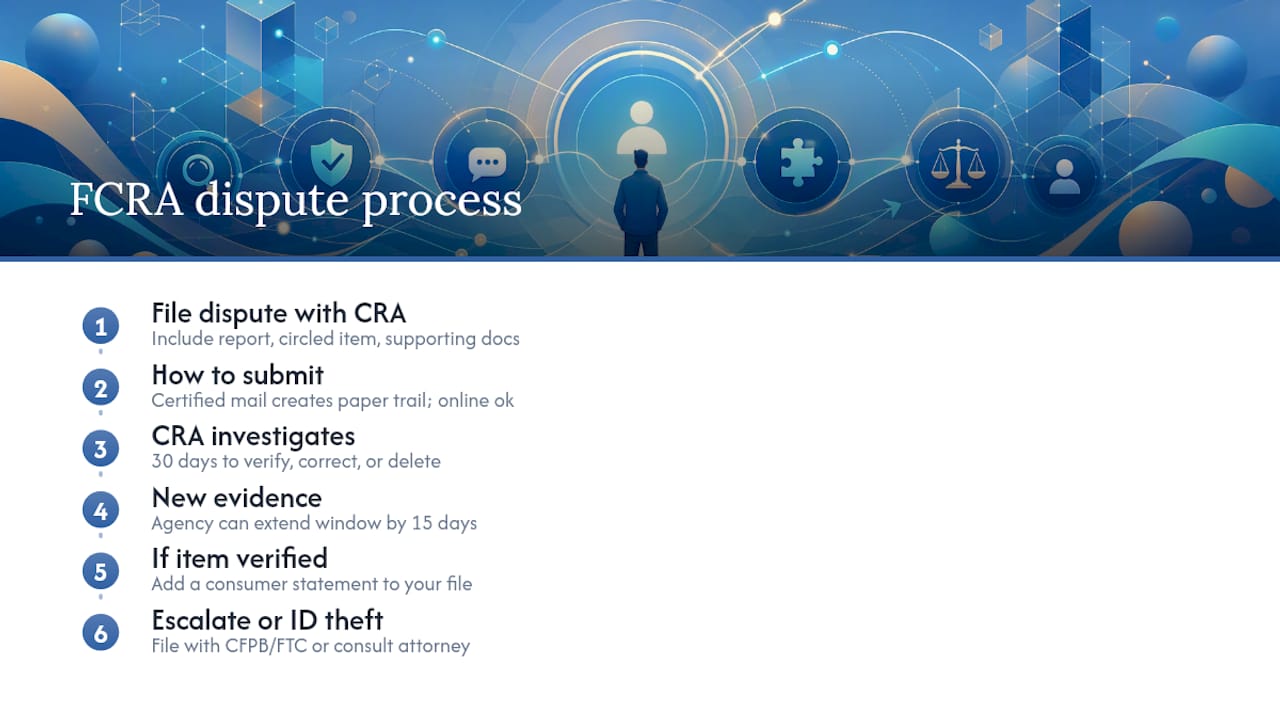
Finding an error is common enough that it’s worth knowing the fix before you find one. The Fair Credit Reporting Act gives you a formal path to correct or remove inaccurate information, and it’s faster than most people expect.
Start by filing the dispute directly with the reporting agency, not the original data source. Include copies of your report with the disputed item circled, any supporting documents (court dismissals, corrected employment letters), and a clear statement of what’s wrong. Certified mail creates a paper trail, but most agencies also accept online submissions now.
Once filed, the consumer reporting agency generally has 30 days to investigate and must either verify, correct, or delete the disputed information. If you submit new evidence partway through, the agency can extend that window by 15 days.
If the correction goes through, the agency has to notify anyone who received your report in the recent past, so a fixed error doesn’t quietly linger with an employer who already saw the old version. If the item comes back “verified” and you still believe it’s wrong, you can add a consumer statement to your file explaining your side, then escalate by filing with the CFPB or FTC or consulting an attorney.
Identity-theft reports carry extra weight in this process. If a record on your file resulted from someone else using your identity, filing a formal identity-theft report with the FTC can speed removal considerably, since agencies treat those disputes with more urgency than a routine accuracy claim. This matters especially for renters: CFPB reporting has flagged recurring problems with tenant screening companies specifically, which is one more reason to check your file before a landlord does.
When to Run Your Self-Check and What to Do With the Results
Timing determines whether a dispute finishes before it matters or after the damage is done.
- Start at the beginning of your job or apartment search, not after an offer is pending. Give yourself at least 30 to 45 days of buffer before any hard deadline.
- Expect different turnaround times by method. A commercial FCRA-compliant service usually delivers in 24 to 48 hours. Combined state and county checks run 1 to 3 weeks. FBI or state mail-based options can take several weeks.
- Once your reports arrive, mark every error immediately. Gather supporting evidence, file disputes right away, and draft a short written explanation you can hand an employer if something questionable but accurate (like an old, resolved case) shows up.
Waiting until a hiring decision is already pending is the most common mistake self-checkers make, and it’s the one that turns a fixable error into a lost opportunity.
What Techstacktoday Looks for in a Background Check Service
Screening services are evaluated with attention to what happens after you hand over your personal data, not just what the marketing page promises.
The core evaluation criteria come down to a handful of things that actually predict whether a report will hold up:
- Data source transparency — does the vendor say where its criminal and civil records come from, or is it vague?
- Multi-jurisdiction coverage — does the service actually search county courts, or does it lean on a shallow national database?
- FCRA compliance statement — a legitimate employer-grade service states this clearly; a consumer-only lookup tool often doesn’t.
- Turnaround time — realistic timelines matter more than promises of instant results.
- PII handling — how long is your Social Security number and address history stored, and is it encrypted at rest?
The trade-off shows up constantly: consumer-only databases are fast and cheap but miss county-level detail, while genuinely employer-grade services cost more and take longer because they’re actually querying court systems.
Pro Tip: Treat vague data-source language as a red flag. If a service doesn’t explain where its criminal records come from or how it handles your PII, that opacity usually predicts poor dispute support later, when you actually need help correcting an error.
Decoding the Jargon: Codes and Formats in Your Report
Background check reports read like they were written for lawyers, not applicants, largely because they’re built from raw court and law-enforcement data rather than plain-English summaries.
Criminal record sections often list a disposition code, things like “nolle prosequi” (charges dropped), “nolo contendere” (no contest plea), or “adjudication withheld” (a conviction wasn’t formally entered even though there was a plea). These distinctions matter enormously to an employer’s screening policy, and a report that just says “convicted” without the disposition code can misrepresent what actually happened.
You’ll also see case numbers formatted by county and year (something like “2019-CR-04521”), which is how you cross-reference a record against the actual courthouse if you need to dispute it. Credit sections use their own shorthand: “R1” through “R9” for revolving account payment history, where lower numbers mean more current and higher numbers mean more delinquent.
Employment and education verification sections typically show a simple “verified” or “unable to verify” status rather than details, since third-party verification services usually just confirm dates and titles against what the employer or school has on file.
If a term on your report doesn’t make sense, don’t guess. Most reporting agencies list a contact number specifically for explaining codes, and using it before you assume something is wrong saves a dispute you didn’t actually need to file.
Keeping Your Own Data Safe While You Check It
Pulling your own background check means feeding your Social Security number, birth date, and address history into whatever system you’re using, which makes the request itself a privacy decision.
Stick to official channels for anything sensitive. AnnualCreditReport.com and FBI.gov are government-run and don’t sell your data. Commercial services vary widely, so check whether a vendor states clearly how long it retains your PII and whether that data gets shared with marketing partners. A vague or missing privacy policy is reason enough to look elsewhere.
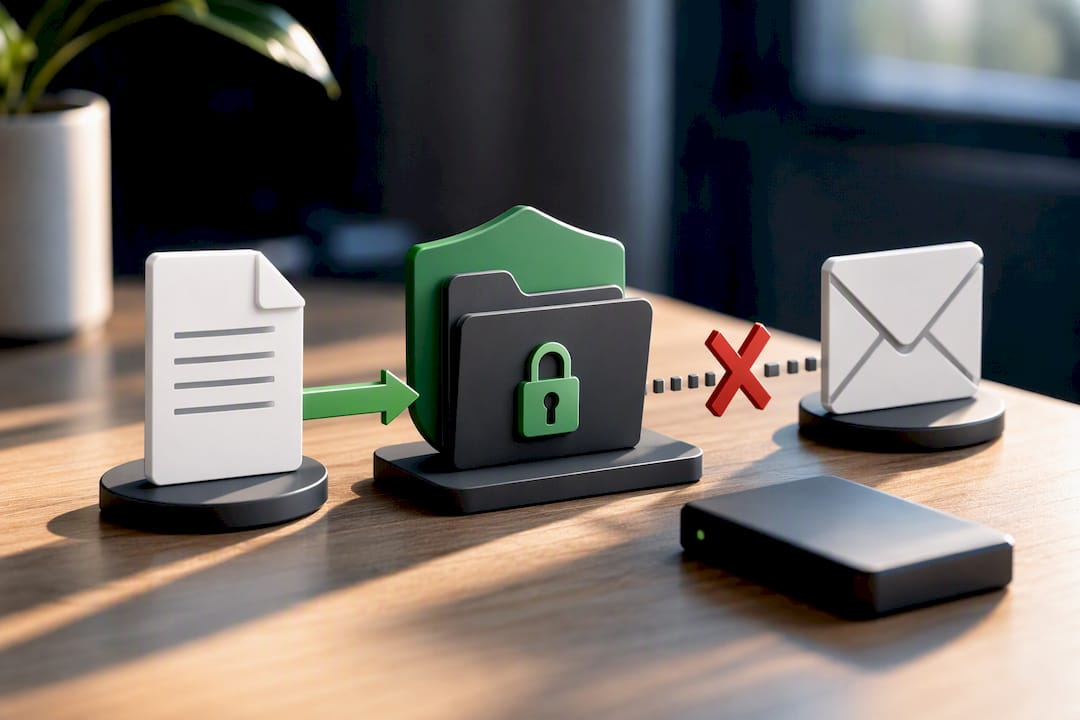
Store your reports carefully once you have them. A PDF sitting unencrypted in a downloads folder, or worse, forwarded through email, is an easy target if your device or account gets compromised. Password-protecting sensitive documents or storing them in an encrypted folder is a small habit that prevents a bigger problem later.
If your self-check turns up personal information scattered across data broker sites, that’s a separate but related fix worth handling at the same time, since the same exposed data that shows up in a background check often shows up in a stranger’s search too.
What a Background Check Won’t Show You
A self-check can miss records for reasons that have nothing to do with vendor quality. Expunged records are, by law, treated as if they never happened, so a properly expunged case shouldn’t appear on any standard report, government or commercial. Sealed juvenile records follow the same logic in most states: sealed means sealed, not just hidden behind a paywall.
That’s actually good news if you had a record expunged or sealed years ago, but it means your self-check can’t confirm the removal worked unless you specifically request confirmation from the court that handled the case. Don’t assume a clean report proves expungement succeeded; it might just mean the vendor you used doesn’t reach that jurisdiction.
International records are another blind spot. Most U.S.-based checks, government or commercial, don’t reliably surface foreign criminal history unless a specific global watchlist search was included, and even then, coverage is inconsistent.
Finally, informal records, things like an employer’s internal note about a workplace dispute that never went to court, will never show up on any formal background check because they were never part of the public record to begin with. If you’re worried about how a past employer might describe you informally, that’s a reference-check concern, not a background-check one, and no self-check will resolve it.
Ready to Pull Your Own Report? Here’s the Fastest Path
If you’ve decided speed matters more than piecing together government sources one at a time, a paid FCRA-compliant service gets you a multi-jurisdiction, employer-equivalent report in a day or two instead of weeks. That’s worth the $30 to $50 cost when a job offer or lease is on a real deadline.
Before you pick one, it’s worth knowing which vendors actually deliver on data source transparency and dispute support versus which ones cut corners. Techstacktoday’s hands-on reviews of background check services break down exactly that, so you’re not gambling your $40 on a vendor that turns out to be a shallow database wrapped in a nice interface.
And if your self-check turns up outdated addresses, old employer listings, or personal details scattered across data broker sites that a background check pulled from, that’s worth cleaning up too. Techstacktoday’s guide on removing yourself from data broker sites covers the practical steps for getting that information suppressed before it resurfaces on your next report. For a broader look at managing what’s visible about you online, this digital footprint guide is a useful companion read.
The Part Nobody Tells You Before You Order Your First Report
The most consistent surprise in self-checks isn’t a scary criminal record. It’s smaller and stranger: a name-mixup with someone who shares your name in a different state, a county case from a decade ago that was dismissed but never cleared from the index, or payroll data that lists an employer slightly differently than you remember it.
None of that is dramatic, but all of it can stall a hiring decision if you find out about it the same day an employer does. Treat a background check on yourself the way you’d treat checking your own credit report: routine maintenance, not a crisis response. Run it early, keep records of anything you dispute, and you’ll never be caught explaining a surprise to someone who’s deciding whether to hire or lease to you.
— TechStackTeam
Sources
- Run a Background Check on Yourself
- Identity History Summary Checks Frequently Asked Questions
- How to Check a Background Check on Yourself for Free
- Can I Run a Background Check on Myself? Here’s How – LegalClarity
FAQ
Can I obtain a background check on myself?
Yes. You can legally request the same records employers and landlords see, either through government sources like the FBI and state repositories or through a commercial FCRA-compliant service.
How do I run a full background check on myself?
Gather your identifiers and address history, pull your credit reports at AnnualCreditReport.com, order your FBI Identity History Summary for $18, request state criminal and driving records, search county courthouse databases, and consider a paid multi-jurisdiction service if you’re on a tight deadline.
What will disqualify you on a background check?
Recent or serious criminal convictions, unverifiable employment or education claims, and unresolved civil judgments are the items most likely to trigger a denial, though the exact standard varies by employer policy and, for renters, by landlord criteria.
What if I lied about my employment history?
Third-party verification services confirm dates and titles directly with employers or schools, so a discrepancy usually surfaces as “unable to verify” or a mismatch, which can cost you the offer even if the underlying job performance was fine. Correcting your application before submission is always safer than hoping a gap goes unnoticed.