Spokeo collects personal data by aggregating publicly available records, online profiles, and purchased third-party datasets, then indexing everything into searchable people-search reports. That matters because your name, address, phone number, and even estimated financial details may be sitting in a Spokeo profile right now, visible to anyone who pays for a search. Techstacktoday has reviewed the primary sources, including Spokeo’s official help documentation and independent analyses, to give you a clear, sourced breakdown of exactly how this works and what you can do about it.
Core source categories at a glance:
- Government and public records (property, court, business filings)
- Online directories and reverse-phone listings
- Public-facing social media profiles
- Purchased marketing lists and third-party data broker partnerships
- User-submitted and survey data
Spokeo explicitly states it is not a consumer reporting agency under the Fair Credit Reporting Act (FCRA), which shapes what it can legally do with that data and what rights you have in response.
Table of Contents
- Where does Spokeo actually get your information?
- How Spokeo gathers, processes, and assembles that data
- What a typical Spokeo profile actually contains
- What the law says about Spokeo’s data practices
- How accurate is Spokeo’s data, and can others see your searches?
- How to remove your data from Spokeo, step by step
- What to do after you opt out to stop data from coming back
- What our research confirmed about Spokeo’s collection practices
- Key Takeaways
- Why the mechanics of data collection matter more than most people realize
- Techstacktoday’s data removal and privacy monitoring resources
- Primary sources and references
Where does Spokeo actually get your information?
Spokeo’s help center confirms the company pulls from federal, state, and local government databases, third-party data broker partnerships, marketing surveys, and public-facing social media profiles. Each source type contributes something different to your profile.
- Government and public records: Property deeds, county assessor records, court filings, business registrations, and voter rolls are all legally public in most U.S. states. Spokeo ingests these in bulk.
- Online directories and phone listings: Whitepages-style directories, reverse-lookup databases, and carrier-linked phone records feed contact details like landline and cell numbers.
- Social media: Public Facebook pages, LinkedIn profiles, Instagram accounts, and similar platforms are crawled for profile photos, usernames, and publicly listed locations or employers.
- Third-party data brokers: Spokeo buys or partners with other aggregators that have already compiled marketing lists, consumer surveys, and purchase-behavior datasets.
- Mailing and survey lists: This one surprises most people. When you fill out a warranty card, enter a sweepstakes, or subscribe to a retail newsletter, that data often ends up sold to marketing list providers, which then sell it downstream to brokers like Spokeo.
The redundancy across sources is deliberate. When the same phone number appears in a property record, a directory listing, and a marketing dataset, Spokeo’s system treats that overlap as a confidence signal and links the records into a single profile. Spokeo’s FAQ highlights social media aggregation as a specific differentiator, describing how social connections and profile links are surfaced alongside contact data.
Pro Tip: Check your social media privacy settings now. Even a “friends only” profile can leak your employer, city, and profile photo to crawlers if your account settings haven’t been reviewed recently.

How Spokeo gathers, processes, and assembles that data
The technical pipeline behind Spokeo’s data collection follows a clear sequence. Understanding it helps you see why removal is harder than it looks.
- Crawl and index. Spokeo uses deep web crawlers, automated scripts similar to search engine indexers, to continuously scrape and index data from online and offline sources. These scripts run on a schedule, not just once.
- Parse and normalize. Raw data arrives in inconsistent formats. A name might be “John A. Smith” in one source and “J. Smith” in another. Spokeo’s system standardizes fields so records can be compared.
- Match and merge. Deterministic rules and machine learning models compare normalized records across sources. Shared attributes like a phone number or address act as anchors that link otherwise separate records into one profile.
- Score and rank. When conflicting records exist, Spokeo’s algorithms select the “best” available data point, sometimes surfacing it with a UI badge to signal the most probable match.
- Publish. The merged, scored profile becomes searchable on Spokeo’s platform.
The matching step is where things get complicated. Machine learning models are good at finding patterns, but they can also merge two different people who share a name and a zip code, especially when source data is thin. A profile might confidently display an address that belonged to a previous resident of your home, not you.
Pro Tip: If you find a Spokeo profile with clearly wrong information, that error likely originated in a source record, not Spokeo itself. Correcting it at the source (a county clerk’s office, for example) is the only way to prevent it from reappearing after you opt out.
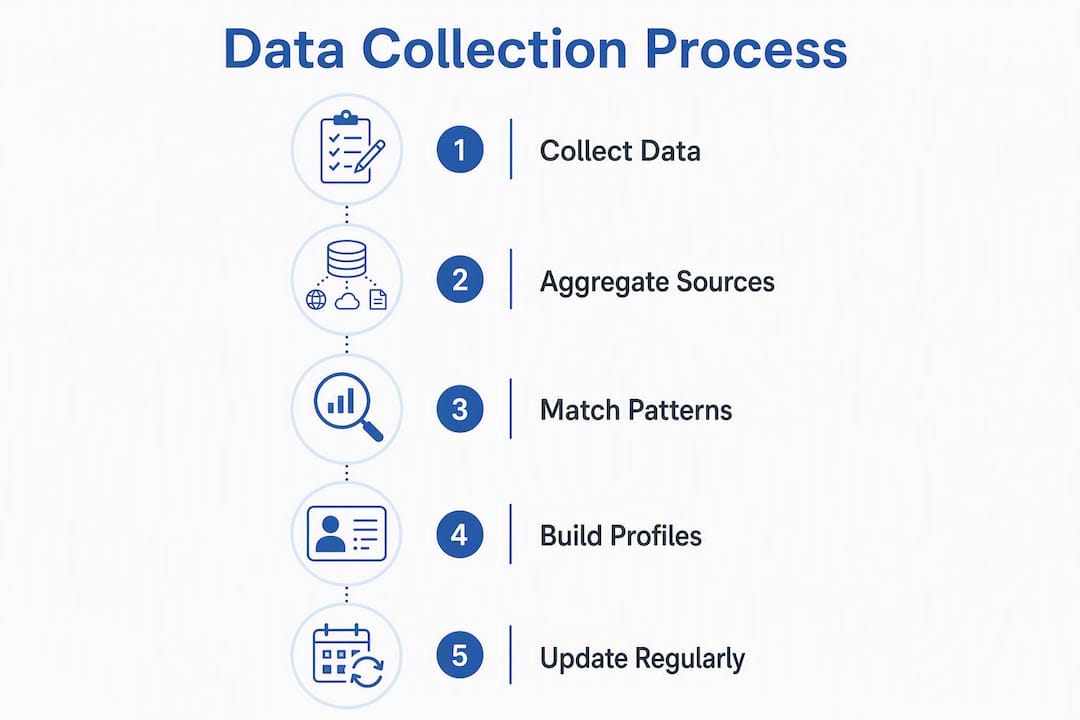
Understanding these background check data broker systems is the first step toward knowing where to push back.
What a typical Spokeo profile actually contains
Spokeo profiles vary in depth depending on how much source data exists for a given person. Here’s what commonly appears:
| Record Type | Typical Fields Shown |
|---|---|
| Address history | Current and previous addresses, estimated move dates |
| Phone numbers | Landline and cell numbers, carrier name, line type |
| Relatives and associates | Names of household members, possible relatives |
| Social media links | Profile URLs, usernames, public posts |
| Property data | Estimated home value, ownership status, square footage |
| Employment | Employer name, job title (from public profiles) |
| Financial indicators | Estimated household income range, net worth estimate |
| Court records | Civil judgments, bankruptcies, criminal records where public |
A few items on that list deserve extra attention:
- Inferred financial indicators (estimated income, net worth) are not pulled from tax records. They come from marketing datasets and statistical models, which means they can be significantly wrong.
- Household composition data is aggregated from multiple sources and can include people who no longer live at your address.
- Social media links may surface posts or profile details you forgot were public.
Routine contact data like a phone number or current city is one thing. Estimated financial details and court records carry real risk if they’re wrong, because a background screener or landlord might see them before you do.
What the law says about Spokeo’s data practices
Spokeo states clearly that it is not a consumer reporting agency under the FCRA and warns that its data should not be used for credit, insurance, employment, or housing decisions. That distinction has practical consequences.
Because Spokeo is not an FCRA-covered agency, it is not required to provide the same dispute and correction rights that credit bureaus must offer. You cannot demand a formal investigation of inaccurate data the way you can with Equifax or TransUnion.
What you can do:
- Opt out directly on Spokeo’s platform (covered in the next section).
- Request data correction at the original source record (county clerk, court system, or the social platform where the data originated).
- File a complaint with the FTC if you believe Spokeo is using data in ways that violate consumer protection rules.
- Invoke state privacy rights if you live in California. The CCPA/CPRA gives California residents the right to request deletion of personal information held by businesses that meet certain thresholds. Other states have passed similar laws, so check your state’s current privacy statute.
One important limit: public records are often legally public and exempt from some state privacy protections. Opting out of Spokeo removes your profile from Spokeo’s index. It does not seal the underlying court filing or property record.
This article is general information, not legal advice. Confirm your specific rights with a qualified privacy attorney or your state attorney general’s office.
How accurate is Spokeo’s data, and can others see your searches?
Accuracy is genuinely inconsistent. Spokeo’s own privacy page acknowledges that results may be incomplete or inaccurate because the company aggregates third-party public sources and does not verify records individually. When source data conflicts, the algorithm picks a winner, and that winner is not always correct.
Common accuracy problems you’ll encounter:
- Outdated addresses from records that predate a move by several years
- Mislinked relatives when two people share a surname and a zip code
- Stale phone numbers from directories that haven’t been updated
- Wrong financial estimates derived from marketing models rather than actual income data
On the question of search visibility: Spokeo does not notify people when someone searches for them. Your search activity on Spokeo is not visible to the person you searched. However, Spokeo does retain your search history as a registered user, and its privacy policy governs how that data is handled internally.
Profiles can and do reappear after removal. Independent reporting confirms that because Spokeo continuously re-crawls public sources, a removed profile can regenerate when new source data is ingested. This is not a bug. It’s how aggregation works.
Pro Tip: Set a calendar reminder to re-check Spokeo every 90 days. Search your name, phone number, and email address separately, since each can surface a different profile URL.
How to remove your data from Spokeo, step by step
You can opt out manually. Here’s the exact process:
- Find your profile URL. Go to Spokeo.com and search your name plus city or state. Copy the full URL of your profile page from the browser address bar.
- Open the opt-out form. Navigate to Spokeo’s opt-out page. Paste your profile URL into the removal form.
- Enter a valid email address. Spokeo sends a confirmation link to this address. Use a real email you can access, but consider using a secondary address to limit further contact.
- Submit the request. Click the removal button and wait for the confirmation email.
- Click the confirmation link. Open the email and click the link to finalize the removal. Without this step, the request does not process.
- Save your confirmation. Screenshot or save the confirmation page. You’ll want this if the profile reappears and you need to escalate.
Important details:
- Each profile URL must be opted out separately. One person can have multiple Spokeo listings because different source combinations create distinct profile aggregates.
- Spokeo’s stated removal window is 24–72 hours after confirmation.
- Removal applies to that specific URL only. The underlying data at the original source is untouched.
- If a removal fails or the form doesn’t accept your URL, try accessing the opt-out page in a private browser window or clearing cookies first.
For a full walkthrough with screenshots, Techstacktoday’s Spokeo data broker removal action plan covers every edge case including partial matches and multiple listings.
Pro Tip: Before you start, gather: your exact profile URL(s), a valid email address, and a screenshot of the profile as it appears now. Automated opt-out services can handle multiple brokers at once, but manual removal gives you a direct confirmation trail.
What to do after you opt out to stop data from coming back
Opting out of Spokeo is one step, not a finish line. Here’s how to reduce reappearance and monitor your exposure going forward.
Preventive actions (do these first):
- Tighten privacy settings on Facebook, Instagram, LinkedIn, and any other public-facing profiles by following best practices for mobile app developers on ensuring data privacy. Set posts, contact info, and friend lists to “friends only” or private.
- Contact original public record sources where possible. Some county clerks allow you to request that a home address be suppressed from online property records, particularly for domestic violence survivors or public safety reasons.
- Opt out of other major data brokers. Spokeo is one of dozens. Sites like MyLife operate similarly and require separate opt-outs.
- Stop publishing new personally identifiable information publicly. Avoid listing your home address, phone number, or full name on public forums, comment sections, or business directories you don’t control.
Monitoring checklist:
- Search your name on Spokeo every 90 days.
- Set a Google Alert for your full name in quotes, your phone number, and your email address.
- Search your address on Spokeo and similar sites periodically, since address-based searches can surface profiles your name search missed.
- Check whether your information appears on MyLife, which aggregates similar data and requires its own removal process.
Paid data removal services automate much of this across dozens of brokers simultaneously. Whether that’s worth the cost depends on your situation. Techstacktoday’s analysis of whether a data removal service is worth it breaks down the tradeoffs honestly. For a broader removal and monitoring workflow, the guide on how to remove yourself from the internet covers cross-broker opt-outs and long-term monitoring in detail.
What our research confirmed about Spokeo’s collection practices
Here’s a direct summary of what primary sources confirm, and where each claim comes from.
- Source categories confirmed: Spokeo’s help center explicitly lists government databases, third-party broker partnerships, marketing surveys, and public social media as its data sources.
- Crawler use confirmed: Spokeo’s documentation describes deep web crawlers as the mechanism for continuous scraping and indexing.
- ML-based matching confirmed: The same documentation describes machine learning models and heuristics used to identify the best available data among conflicting records.
- FCRA non-coverage confirmed: Spokeo’s help center states directly that Spokeo is not a consumer reporting agency under the FCRA.
- Accuracy limits confirmed: Spokeo’s privacy page acknowledges results may be incomplete or inaccurate.
- Opt-out mechanics confirmed: Spokeo’s opt-out page confirms that removal requires a specific profile URL and email, and that opt-out does not remove data from original sources.
- Reappearance risk confirmed: Security.org’s independent analysis and Wikipedia’s Spokeo entry both note that profiles can regenerate after removal.
Methodology note: Techstacktoday reviewed Spokeo’s public-facing help center, documentation pages, privacy policy, opt-out page, and FAQ, then cross-referenced claims against independent third-party reporting. No private system access was available. All findings are based on publicly stated company positions and external analyses.
Key Takeaways
Spokeo aggregates data from public records, social media, and purchased broker datasets, then uses automated crawlers and machine learning to build searchable profiles that can reappear even after you opt out.
| Point | Details |
|---|---|
| Spokeo’s data sources | Public records, social media, marketing lists, and third-party broker purchases all feed into profiles. |
| FCRA status matters | Spokeo is not an FCRA consumer reporting agency, so standard credit-bureau dispute rights do not apply. |
| Opt-out is URL-specific | Each profile URL must be removed separately; removal does not delete data from original sources. |
| Reappearance is common | Profiles can regenerate when Spokeo re-crawls public sources; check every 90 days. |
| Techstacktoday’s resources | Use Techstacktoday’s Spokeo removal action plan for a step-by-step guide and tested removal service comparisons. |
Quick action checklist (under 10 minutes):
- Search your name on Spokeo now and copy any profile URLs you find.
- Submit each URL to Spokeo’s opt-out form and confirm via email.
- Set a Google Alert for your name and phone number.
- Review your social media privacy settings on at least one platform today.
Why the mechanics of data collection matter more than most people realize
Most people treat Spokeo as a nuisance, a site to opt out of once and forget. That’s the wrong frame. The real issue is structural: Spokeo doesn’t create your data. It assembles it from dozens of sources that already exist, which means opting out of Spokeo alone is a partial fix at best.
The part that gets underestimated is the financial and household data. Estimated income ranges and household composition pulled from marketing datasets are not labeled as estimates on a Spokeo profile. A landlord, a prospective employer doing informal research, or someone with bad intentions sees those figures without any asterisk. When that data is wrong, and it often is, you have no FCRA-backed right to force a correction at Spokeo itself.
The practical stance worth taking: treat data broker opt-outs as ongoing maintenance, not a one-time fix. Combine them with source-level corrections where possible, tighter social media privacy, and periodic monitoring. That combination is what actually reduces your exposure over time. Expecting a single opt-out to hold permanently is the most common mistake people make, and it’s the one that leaves them most exposed.
Techstacktoday’s data removal and privacy monitoring resources
If manually tracking down and removing profiles across dozens of data brokers sounds like a lot of work, that’s because it is. Techstacktoday tests and ranks data removal services so you don’t have to guess which ones actually deliver.

The Spokeo data broker removal action plan on Techstacktoday walks you through every step, covers multiple-profile edge cases, and compares paid removal services based on real-world testing, not sponsored rankings. If you’re weighing whether a paid service is worth the cost, the data removal service analysis gives you an honest breakdown of what you get versus what you can do yourself. Techstacktoday earns affiliate commissions when readers sign up for services through its links, and every recommendation is based on hands-on evaluation. Start with the action plan, compare your options, and pick the approach that fits your situation.
Primary sources and references
- Where does Spokeo get its data? – Spokeo Help Center: Spokeo’s official list of source categories including government databases, broker partnerships, and social media.
- What is Spokeo? – Spokeo Help Center: Spokeo’s statement on FCRA non-coverage and intended use restrictions.
- Spokeo docs — about: Technical documentation describing deep web crawlers, ML-based matching, and data processing.
- How to Opt Out of Spokeo – Security.org: Independent third-party guide confirming reappearance risk and practical removal timelines.
- Spokeo – Wikipedia: Historical context and third-party analysis of Spokeo’s data aggregation practices.
Check Spokeo’s opt-out and privacy pages directly before starting any removal request. Procedures and timelines can change, and the live page will always reflect the current process.